All faceted diamonds hold an undeniable charm, with each shape telling its own story. Perhaps this is why they remain favorites among women—becuase sometimes all she truly desires is bling. And what’s bling if it isn’t the royal elegance of the asscher cut diamond?
Many cuts take their names from their appearance, such as heart‑shaped, pear (often called teardrop), or round brilliant. The asscher cut differs because history and sophistication define it, not its shape. So how did this extraordinary cut rise to popularity? Let’s explore its fascinating history.
An Endless Cascade of Sparkles
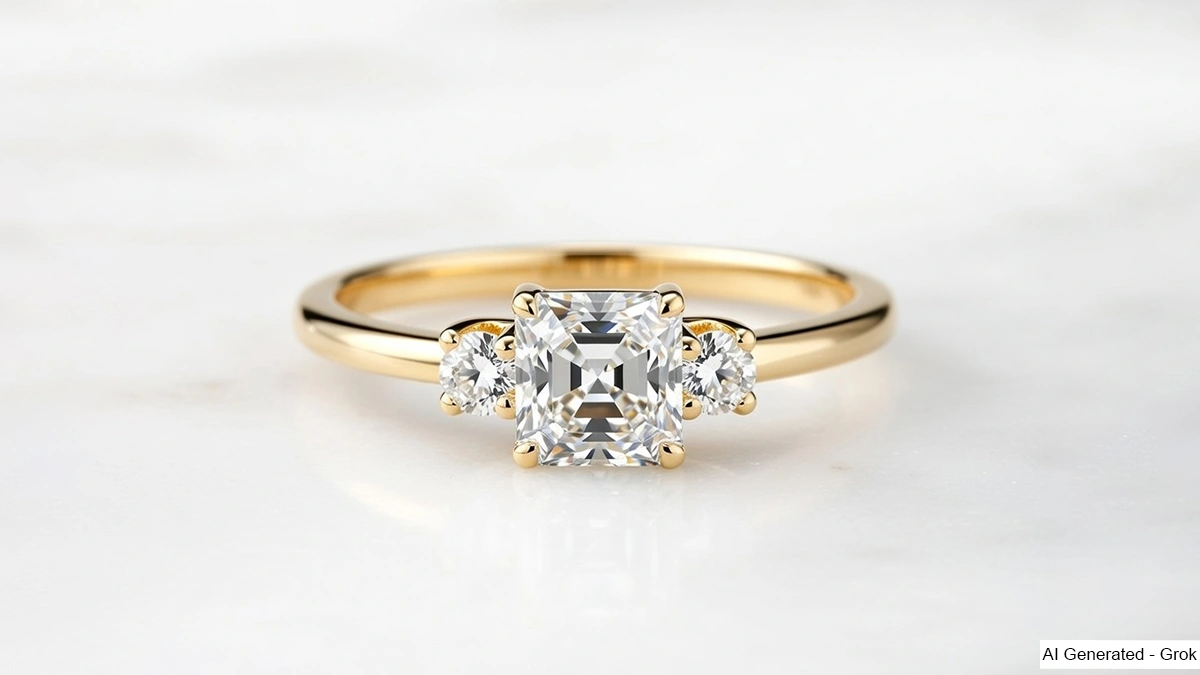
A geometric masterpiece reflects everything but your fingerprints, with sparkles cascading in an endless, precise flow.
The asscher cut looks similar to the emerald cut because both are step cuts that emphasize clarity and symmetry. The most obvious difference, however, is in shape: the emerald cut takes a rectangular shape, while the asscher cut forms a square. This cut features large step facets and a high crown that reflect remarkable brilliance, unlike other diamond shapes. In fact, diamond experts often describe the sparkle of an asscher cut diamond as a “hall of mirrors.”
Although the cut is square, it also resembles an octagonal shape because there are four cropped corners. However, these cropped corners disappear in a four‑prong setting, so the stone doesn’t appear octagonal.
History of the Asscher Cut Diamond
The history is seeped in the tales of British Kings, massive gems, and a very stressed-out Dutchman.
The story began in 1907, when King Edward VII of England entrusted the Asscher Diamond Company, later Royal Asscher, to cut the Cullinan Diamond. By then, the company had already earned a reputation for cutting and polishing diamonds into beautiful forms since its founding in 1854. The British commission only elevated their fame further.
The Cullinan Diamond, weighing an astonishing 3,106 carats, ranks as the largest rough gem‑quality diamond ever discovered. Joseph Asscher, the senior member of the firm, studied the stone for nearly two months before determining the best way to shape it. On February 10, 1908, he began the delicate work. It took two attempts to cut the gem as planned. Legend has it that Asscher fainted the moment he completed the high‑pressure job. His son, Louis, later insisted that the only thing to fall that night was a bottle of champagne.
Stories may vary, but one fact remains: Joseph Asscher invented the asscher cut in 1902. It was first called the rectilinear cut. The Cullinan Diamond became a fine specimen of his legendary craftsmanship. It was also for the first time in history that a diamond cut received a patent, which remained valid until World War II.
Renaissance Roots to the Royal Asscher Cut Diamond
The table cuts of the Renaissance served as the inspiration behind the asscher cut. This marked a significant evolution from the old mine cut that dominated the 1800s. Although the asscher cut marked the first step toward the modern emerald cut, it reflects more light and fire, offering distinctive brilliance.
The asscher cut, along with other step cuts, became especially popular during the Art Deco period. Geometric jewelry patterns defined the style of the 1920s and 1930s. By the mid‑1930s, however, its popularity declined, largely due to overuse and the economic effects of the Great Depression.
After World War II, the Asscher family rebuilt their company. In 1980, Queen Juliana of the Netherlands awarded the firm the prestigious “Royal” title in recognition of its contributions to the diamond industry. Today, the Royal Asscher Diamond Company remains family‑owned and internationally renowned for its expertise and the enduring history of the asscher cut diamond.
The Modern Day Asscher Cut Diamond
Proof that some things actually do get better with age, and a few more facets.
The Royal Asscher Diamond Company resumed production of the original asscher cut diamond in 2001. Now called the Royal Asscher Diamond, this modern masterpiece increases the facet count from the industry-standard 58 to a dazzling 74. The extra 16 facets and wider corners amplify the stone’s brilliance while preserving the beauty and elegance of its predecessor.
That being said, the original asscher cut diamond appears only in jewelry from the 1920s and 1930s, which makes it extremely rare. Today, only experts manufacture the latest asscher cut diamonds. The redesigned Royal Asscher Diamond left the commercial market in 2005, preserving its rarity.
Exclusivity isn’t the only appeal of the asscher cut.
Radiant and refined, it combines the brilliance of a gem with the unique look and handcrafted quality of the older shape. That’s why celebrities such as Jessica Alba and Kate Hudson proudly flaunted their asscher cut diamonds. Sarah Jessica Parker wore an asscher cut diamond ring on her middle finger while starring in Sex and the City. Sharon Stone is also an avid admirer, choosing an impressive 11‑carat stone.
The most famous example of the asscher cut diamond is the piece Richard Burton gifted to Elizabeth Taylor. This is the captivating 33.19‑carat Krupp Diamond, which he purchased at auction in the late 1960s. After receiving the ring, Taylor wore it both off screen and on-screen. It even appeared in animated form during her special guest appearance on The Simpsons.
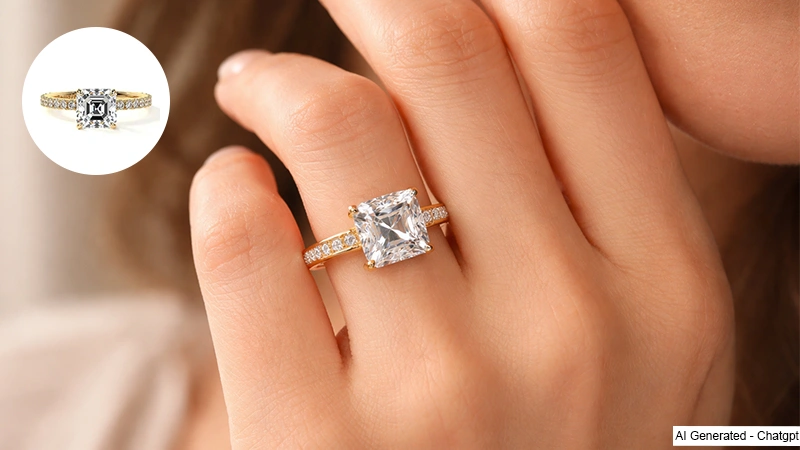
Since the cut isn’t as brilliant as other diamond shapes, it pairs beautifully with a halo setting to add extra sparkle to the centerpiece. You can choose it for an engagement ring and set your lifetime in the glow of enduring shimmer. Beyond rings, asscher cut diamonds shine in tennis bracelets and stud earrings. No matter how you wear it, an asscher cut speaks volumes about your elegant personality.
Some Asscher Cut Jewelry
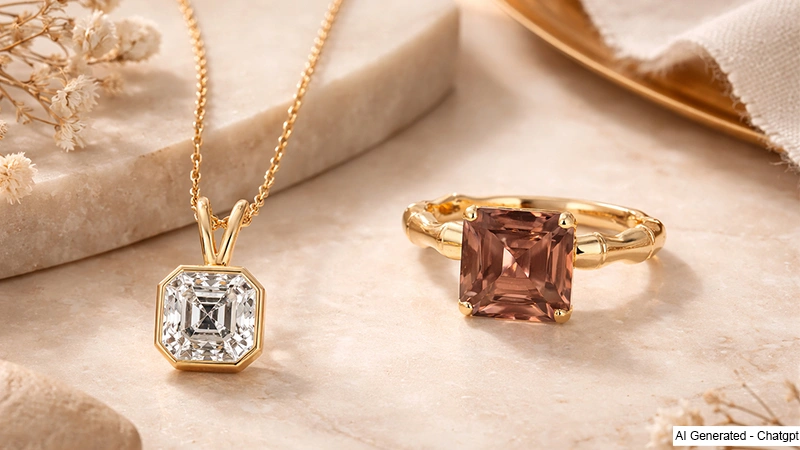
The iconic square silhouette looks quite stunning in brilliant technicolor.
Wondering if the asscher cut is limited to diamonds? It isn’t. You can enjoy the same shape in other gemstones as well. Here are a few examples that might inspire you.
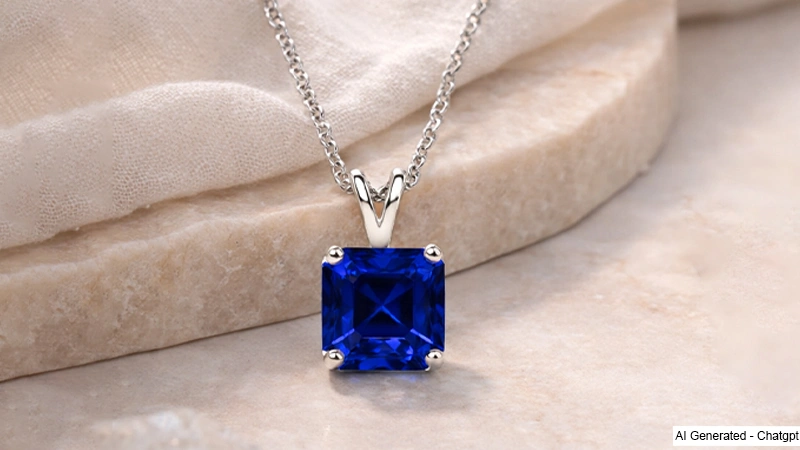
Asscher Cut Blue Sapphire Pendant
Stone: S51034ECSetting: P30249
Metal: 14k White Gold
Price: $26,918
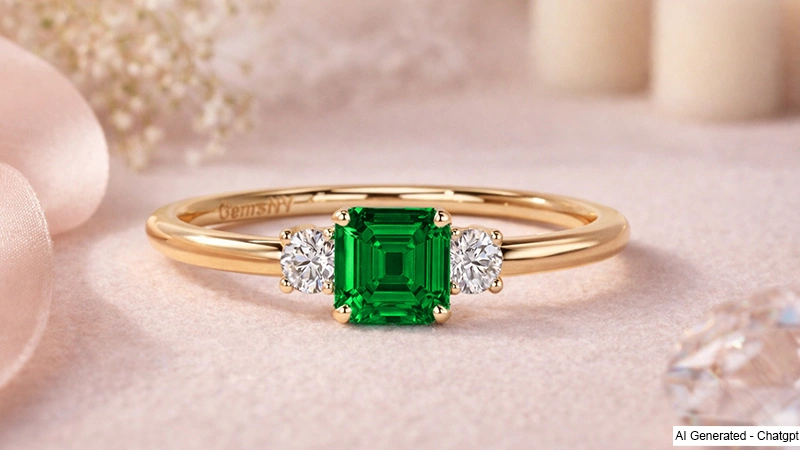
Asscher Cut Emerald and Diamond Three-Stone Ring
Stone: E282196EC
Setting: R10694
Metal: 14K White Gold
Price: $2,310
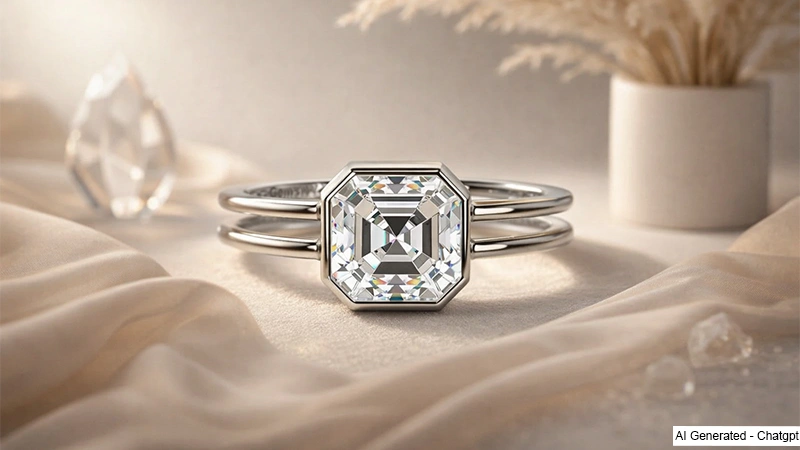
Double Band Asscher Diamond Ring
Stone: N50921
Setting: R11754
Metal: 14k White Gold
Price: $2,373
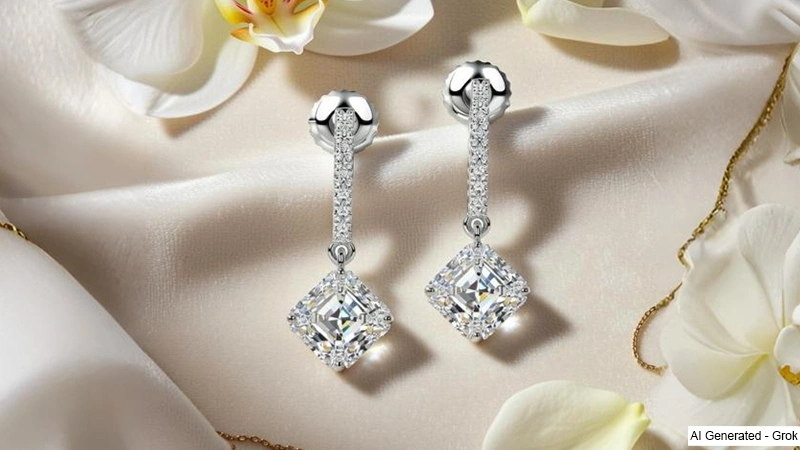
Lab Grown Diamond Asscher Diamonds Dangling Earrings
Item: ELD067
Metal: 14k White Gold
Price: $3,129
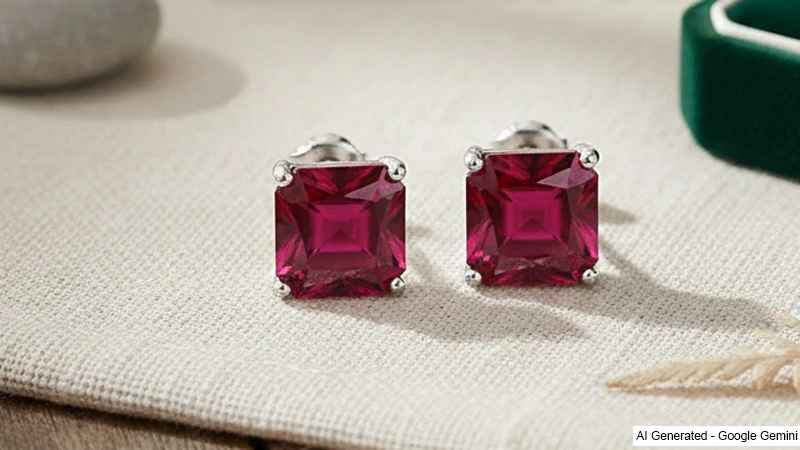
Asscher Cut Ruby Stud Earrings
Stone: RP30826NEC
Setting: E20239
Metal: 14k White Gold
Price: $933
Parting Thoughts
For when you want a diamond with a history and a future as bright as yours.
The asscher cut diamond is undeniably a treasure in any woman’s jewelry wardrobe. It also makes a perfect choice for engagement rings, especially for couples who love a touch of royalty and exquisite craftsmanship. Whether the stone is small or large, each one delivers that awe‑inspiring look of pure class.
Such elegance deserves craftsmanship you can trust, and that’s where GemsNY comes in. Here, we prioritize quality above everything, and that commitment has made us one of the most trusted names in the industry. Discover our extensive collection of diamond jewelry and select a design that truly speaks to you.
FAQ’s
1. Is asscher cut diamond jewelry more expensive?
No. Shape isn’t the only factor out of 4Cs to drive the price. A higher quality but smaller diamond may be pricier than an asscher cut diamond of lower grade.
2. What’s so special about the asscher cut diamond?
Its appeal lies in its clarity and smooth luster. As a step cut, it retains more color than brilliant cuts. It also has a rich history, which makes the asscher cut unique.
3. What to look for when buying an asscher cut diamond ring?
Look for eye‑clean diamonds. Pay attention to symmetry, proportions, and clarity, since the asscher cut’s open table makes inclusions more visible.
4. What is the difference between a royal asscher and a standard asscher cut diamond?
A royal asscher cut has 74 facets and a higher crown. A standard asscher cut features 58 facets and stands as the widely recognized design.
5. What is the best setting for asscher cut diamond rings?
The best setting for this cut is a classic solitaire diamond ring. This design brings out the sparkle of the shape, showcasing the stone’s timeless elegance.
6. Is an asscher cut diamond perfect for an engagement ring?
Yes. Asscher cut diamonds are perfect for couples who prefer refined elegance over bold sparkle. If you love enduring shine, a vintage‑inspired ring can be your symbol of forever.
7. Why choose an asscher cut over an emerald cut?
The asscher cut tends to show more light and fire than the emerald cut. Its square shape with cropped corners gives a bold, vintage look, while the emerald cut offers a sleeker, more modern style.
8. Can I get asscher cut jewelry in morganite or aquamarine?
Of course. This is a popular and versatile cut, and it’s not just for diamonds. You can choose gemstone jewelry in this style, such as earrings, rings, pendants, and even bracelets.
9. Is the asscher cut always square?
Yes, they’re typically square. However, the Royal Asscher Company, which created this cut, has introduced designs in other shapes, such as pear and cushion. These variations still carry the step‑cut brilliance and hall‑of‑mirrors effect.
10. Can I create a ring using an asscher cut diamond?
Absolutely! At GemsNY, using the Make Your Own feature, you can create a ring with an asscher cut diamond. Simply choose the setting, metal, and price to get the perfect sparkler.