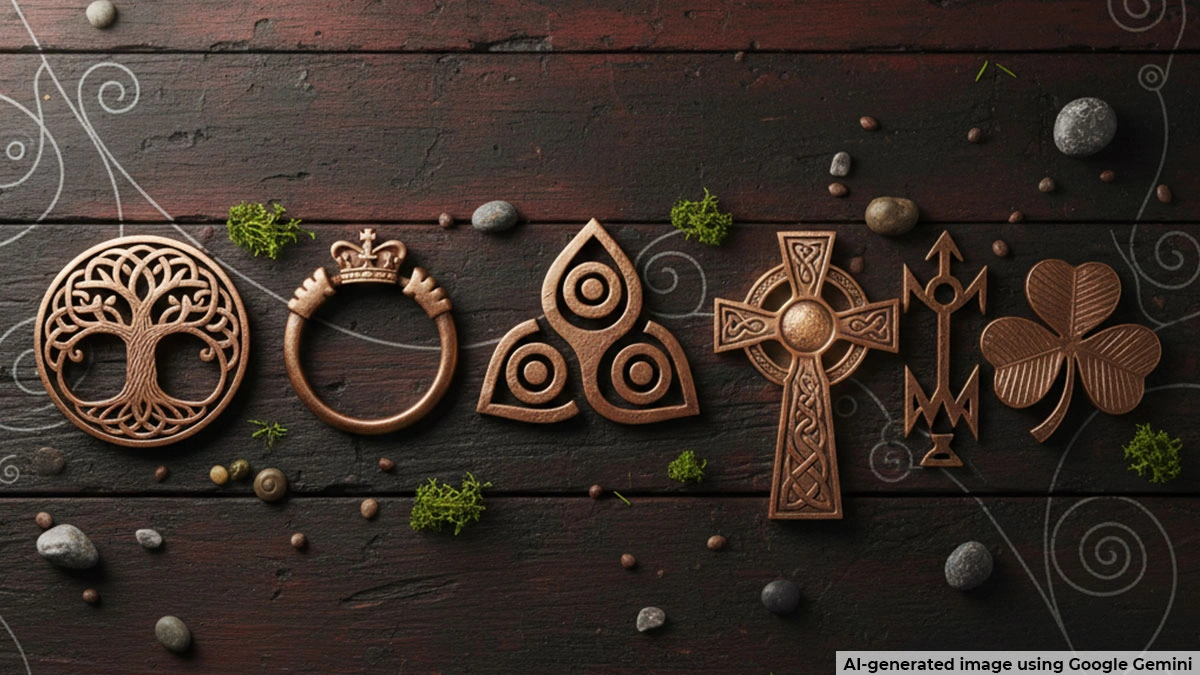
A tale as old as time—no, we’re not evoking Rapunzel or the Sleeping Beauty, but something real, more intriguing: Celtic symbols. Now, if you think carefully, these signs are deeply related to jewelry. Their designs are timeless, intricate and carry centuries of allure that are often not understood.
In the relentless pursuit of the latest trends and celebrity glamor, we tend to forget the ancient artistry that inspired modern styles. From an infinity pendant to a floral motif, don’t you think they echo the age when Beowulf was first imagined? Or the time when people believed dragons were real? Yes, it’s a tale of that era, when certain symbols were revered as auspicious and carved into jewelry.
The Origin and History of Celtic Symbols
Originating in the Iron Age and Medieval Europe, Celtic culture left a lasting imprint on history through its distinctive symbols. Far from ordinary adornments, these motifs served as powerful tools of communication, each one tied to cultural wisdom and storytelling.
The intricate Celtic symbolic system draws from diverse influences, including Irish, Scottish and Viking traditions. These symbols found their way in metal jewelry, carved stones, ancient manuscripts and even the tattoos of Celtic warriors.
Celtic symbols carry profound meaning and mystical significance. From the iconic Triquetra to the Celtic cross, each motif holds a rich backstory and a spiritual or philosophical message.
The art of that era was never merely decorative; it was deeply symbolic, woven into beliefs, rituals, battles and daily life.
From the Cattle Raid of Cooley to children’s fantasy tales of Finn McCool, every story echoes the essence of Celtic symbols. If you desire a fairytale blended with jewelry, we’re here as your fairy godmother. Bibbidi-bobbidi-boo—let the magic begin.
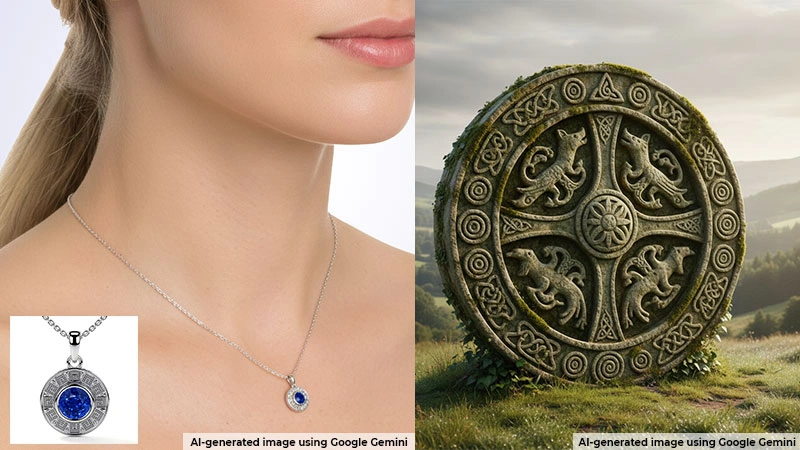
Celtic Wheel: The Symbol of Eternal Evolution
The Celtic wheel or chariot wheel typically features six or eight spokes and is also known as the Wheel of the Year. Passed down by Celtic ancestors, this calendar-like symbol reflects the rhythm of nature and the interconnectedness of all things.
The wheel is an ancient map that spins into the new world, helping humans restore balance and reclaim personal sovereignty.
More than an artifact, it symbolized Celtic polytheism, linked to Taranis, god of sky, thunder and sun’s divine energy. Sounds familiar, doesn’t it? Like the Greek gods Apollo and Zeus. Yes, they were alike but never the same.
Over time, the Celtic wheel evolved, with a four-spoke design becoming prominent during the Bronze Age. The variant often resembled a solar symbol or sun cross.
A Celtic wheel pendant is for those who seek divine blessings, an emblem of strength and protection. With its cyclical nature, the circle remains an enduring symbol of eternal evolution, a guiding beacon for personal journeys.
The Celtic Tree of Life
The Celtic Tree of Life is an auspicious symbol in Celtic culture and art. The intricate design reflects the connection between the spiritual and physical realms. It represents an oak tree’s roots reaching deep into the earth and its branches stretching toward the heavens.
To the Celts, the roots of the oak were sacred, symbolizing a deep connection to one’s origins. In contrast, the branches represented a link to the spiritual world. This symbol is often associated with the cycle of life, death and rebirth. The Celtic Tree of Life appears frequently in artwork, including the Book of Kells. Created by Celtic monks in the 8th century, this manuscript features detailed illustrations of the symbol.
Today, the Tree of Life remains a universal emblem of hope, resilience and strength. It reminds us to stay connected to our roots while reaching for divine blessings in times of hardship. It also signifies the continuity of life and the promise of new beginnings.
The Celtic Cross
The Celtic cross is another prominent symbol in Celtic art. Some believe it represents the Son and the Holy Spirit, a powerful emblem of faith and hope.
Rooted in pre-Christian Celtic traditions, the cross also appears in jewelry, such as pendants and rings. It symbolizes eternal love and, for many, offers protection and good fortune.
Triskelion: The Celtic Triple Spiral
The Triskelion, stemming from the Greek word “Triskeles,” meaning “three legs,” is one of the most well-known Celtic symbols.
Resembling three legs in constant rotation around a unified center, this tri-fold spiral pattern signifies perpetual motion. Its symbolism reflects the holy trinity in Celtic Christianity. When worn as a pendant or tattoo, it can energize the wearer, stimulating progress, cycle and action.
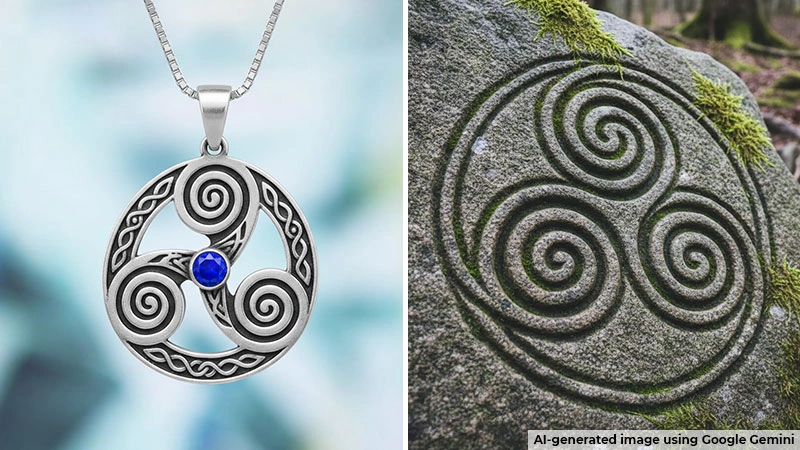
Also known as the Celtic love knot, the Triskelion is among the oldest Celtic symbols. Its three arms represent earth, water and fire, elemental forces central to Celtic beliefs. The endless loops woven into the design embody unity, eternal life and love. With its transformative energy and profound symbolism, the Triskelion remains a cherished icon of Celtic heritage.
Celtic Triquetra Knot: The Trinity of Life
Celtic symbols and meanings often feature intricate knot motifs. These knots typically represent the endless cycle of life, death and rebirth. With no clear beginning or end, their continuous looping design also symbolizes eternal love. Known as the “Trinity knot,” the Triquetra is one of the most popular Celtic knot symbols representing the spirit, mind and body. While often linked to the Christian Trinity, its origins trace back to Pagan traditions.
The Triquetra’s threefold structure evokes the flow of time—past, present and future, forming an unbroken thread of existence.
It’s also cherished as a family symbol, representing the bond between mother, father and child. Early Christians embraced this ancient motif, interpreting it as a symbol of birth, death and renewal.
Though sometimes called a Celtic triangle, it’s more accurately a three-pointed figure. With its elegant symmetry and layered meanings, the Triquetra remains a powerful emblem of love, continuity and spiritual unity in Celtic lore.

Celtic Antler Symbol
Antlers regrow throughout a deer’s life, symbolizing rebirth, regeneration and nature’s enduring cycle in ancient Celtic mythology and lore. The deer itself represents the formidable forces of nature, a sacred creature that Celtic people revered. Antlers, therefore, hold a significant place among Celtic symbols, embodying the essence of the animal kingdom’s unmatched grace and strength.
Today, antler tattoos are popular among those seeking enduring love. The antler signifies tolerance, compassion, beauty and longevity. Its timeless symbolism makes it a captivating choice for rings and other Celtic-inspired jewelry. Truly, it stands as a testament to the strength and beauty of nature.
Celtic Charm of Fortune: Four-leaf Clover
We promised a fairytale and here’s one. The four-leaf clover originates from Celtic lore. The first leaf represents hope, the second faith, the third love and the fourth symbolizes luck.
Each leaf resonates with these optimistic feelings, serving as a beacon of good fortune. In Irish and Celtic traditions, finding a four-leaf clover meant glimpsing fairies and protection from their mischievous magic. Intrigued yet? Hopefully yes. If you’re craving more, we’ll gladly spin tales of Irish Leprechauns, but that’s a story for another enchanted day. We have more Celtic symbols waiting in our store.
The Claddagh
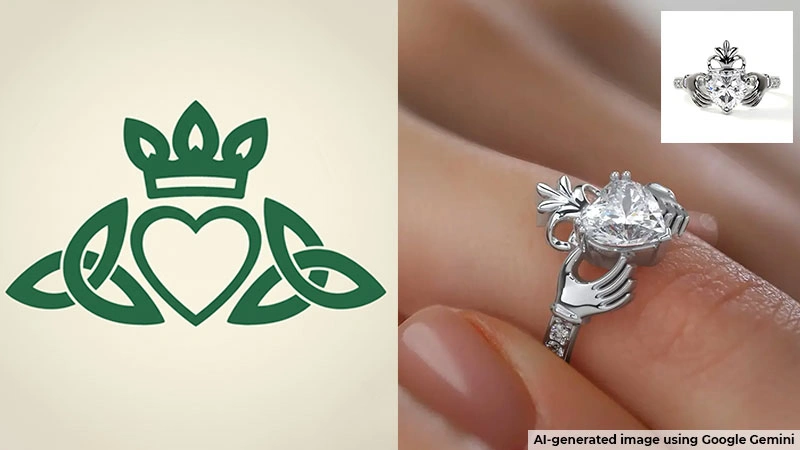
Wearing a Claddagh ring honors a traditional Irish symbol that expresses love, loyalty, and friendship through its heart, hands, and crown. The design originated in the village of Claddagh, near Galway in Western Ireland. People often wear this ring to celebrate their Irish roots.
Traditionally, a Claddagh ring indicates the wearer’s relationship status. It’s also passed down through generations as a cherished family heirloom.
Serch Bythol
A Serch Bythol is a traditional Welsh symbol that signifies friendship, love and loyalty. Rings in this design feature two three-pointed knots that form a continuous, circular flow with no beginning or end. This symbolizes a strong bond between two people, united in body, mind and spirit. While not a traditional Celtic knot, it’s a popular modern symbol of committed love.
A Serch Bythol ring makes a meaningful gift for couples getting married or engaged. In Welsh, it’s also known as the “true love ring.” Those of Welsh descent often wear it to honor their cultural roots.
The Irish Harp
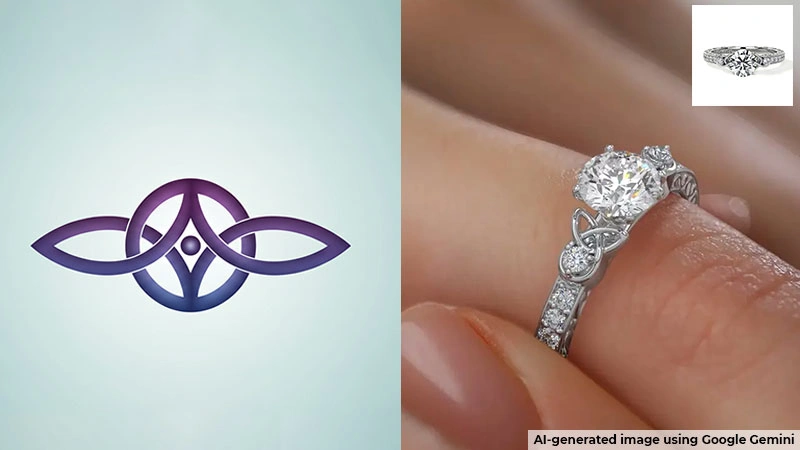
The harp is a cherished symbol in Celtic art, representing joy, music and celebration. It often appears in jewelry designs, believed to bring good fortune and protection to the wearer. The harp symbolizes happiness, health and prosperity.
Many associate the harp with the ancient Celt, viewing it as a reflection of their spirit and legacy. It remains a powerful emblem of Irish culture and identity.
The Celtic Motherhood Knot
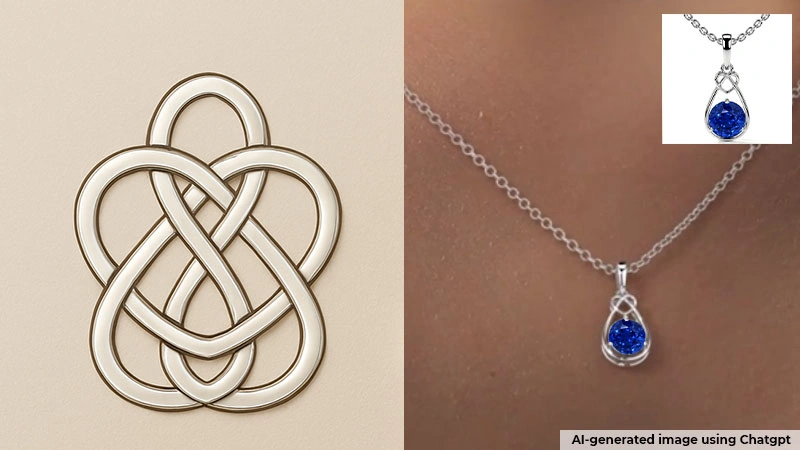
Among all Celtic knot symbols and meanings, a motherhood knot is common to both Scottish and Irish cultures. Its continuous design with no beginning or end reflects the everlasting bond between mother and child.
The Celtic motherhood knot is a powerful emblem. Its intricate form symbolizes eternal connection. People commonly use it as a heartfelt tribute to mothers and motherhood.
Dragon Knot
Almost all cultures around the world have a creature resembling the mythological fire-breathing dragon and the Celts were no exception. In Celtic artwork, dragons are depicted with their tails in their mouths, symbolizing the cycle of nature and immortality. This powerful creature also represents energy and strength, its twisted form echoing the intricate patterns of a Celtic knot.
The Shamrock
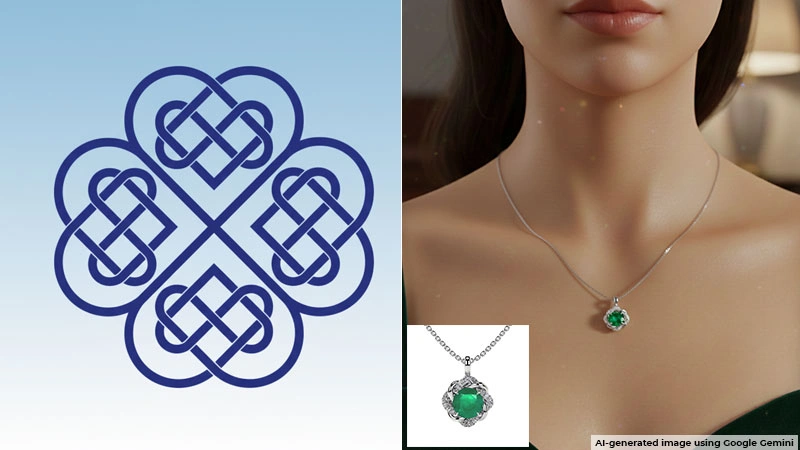
The Shamrock symbol symbolizes good fortune and luck making it a popular choice among jewelry designers. Its design features three heart-shaped leaves, said to bring happiness, health and wealth.
The Shamrock is also closely associated with Saint Patrick, the patron saint of Ireland. He used its three leaves to represent the Holy Trinity.
Solomon’s Knot
Similar to other knot symbols, this one also has no beginning or ending, representing eternity and immortality. Its name is associated with the Biblical monarch Solomon, revered for his knowledge and wisdom. The knot is also known as the Seal of Solomon.
The two-entwining figure adds another layer of meaning: a connection of love, making it a symbol of unity and affection.
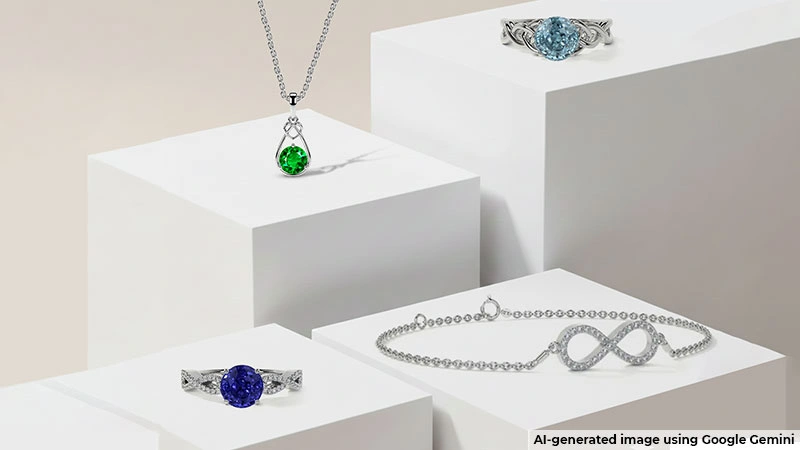
From the Tree of Life to the Claddagh ring, Celtic symbols carry a rich history that spans centuries. Whether it’s a dragon or a mother-child bond, each symbol reflects deep emotions, making Celtic traditions relatable to everyday life.
Symbols of Life, Love and Fairytale
Love, happiness, strength and protection are essential parts of life’s cycle. From birth to death and renewal, Celtic symbols offer a meaningful touch of emotion, enchantment, and timeless belonging. When incorporated into jewelry, these symbols create an intimate connection to land, heritage and the spiritual world.
At GemsNY, we celebrate the bond between adornments and tradition, fusing gemstones, metals and symbolic meaning into every design. Each piece reflects the precision of quality craftsmanship. So, if Celtic symbols speak to you, consider exploring our collection at www.gemsny.com.
FAQ– Celtic Symbols & Meanings
1. What does Celtic jewelry symbolize?
It offers deep symbolic meaning, often representing complex ideas and narratives, such as life, eternity, unity and balance. These symbols are connected with spiritual beliefs, rituals, battles and everyday life.
2. What are the most powerful Celtic symbols?
The Celtic Tree of Life and the Celtic cross are among the most iconic symbols. The Tree of Life represents harmony, balance and connection between heaven and earth. The Celtic cross symbolizes eternal life, faith and heritage.
3. What are the four main elements of a Celtic symbol?
The four main elements are earth, water, fire and air, representing the fundamental forces of nature. The design of a four-part Celtic knot, known as Quaternary knot, symbolizes these elements. It also reflects the cardinal directions (north, west, east and west) and the four seasons.
4. What is the Celtic symbol for good fortune?
The Shamrock is a traditional Irish symbol of good fortune, closely associated with St. Patrick. He used its three leaves to represent the Holy Trinity.
5. What is the Celtic symbol for new beginnings?
In Irish and Celtic cultures, the Triskelion symbolizes growth and new beginnings. It reflects birth, life and death, symbolizing renewal and the belief that every ending marks a new beginning in the cycle.
6. Are there Celtic symbols that represent female strength?
Yes. The triple spiral, Dara knot and the moon knot represent female intuition, strength and cycles of power. Women can incorporate these symbols into rings, pendants, bracelets and earrings and express their inner wisdom.
FAQ- Celtic Jewelry Styles & Wearing Guide
1. What are the different types of Celtic adornments?
Celtic rings often feature knot designs, Claddagh style or symbols like the Tree of Life and Triskele. Necklaces and pendants include various knot patterns, the Celtic cross and the Tree of Life. Earrings may feature Claddagh motifs and knot designs.
2. Can anyone wear Celtic Jewelry?
Yes. Celtic symbols are an artistic expression of culture and tradition. For those who value ancient traditions, a Celtic ring becomes a talisman—linking the wearer to heritage, history and timeless meaning.
3. Is Celtic jewelry Scottish or Irish?
Celtic jewelry designs are based on works of ancient Celts of Medieval Europe, Ireland, Scotland and Britain. These designs feature intricate patterns and two-dimensional decorations based on symbolic motifs.
4. Is there a Celtic eternity ring?
Yes. A Celtic eternity ring features a seamless knot design that wraps around the band. It symbolizes eternity, love and unity, values deeply rooted to Celtic traditions.
5. Can I create any Celtic symbol jewelry?
Absolutely. At GemsNY you can design jewelry based on Celtic symbols. Explore preset designs to simplify the process. You can also browse our ready-made collection for meaningful pieces or have a design custom made.