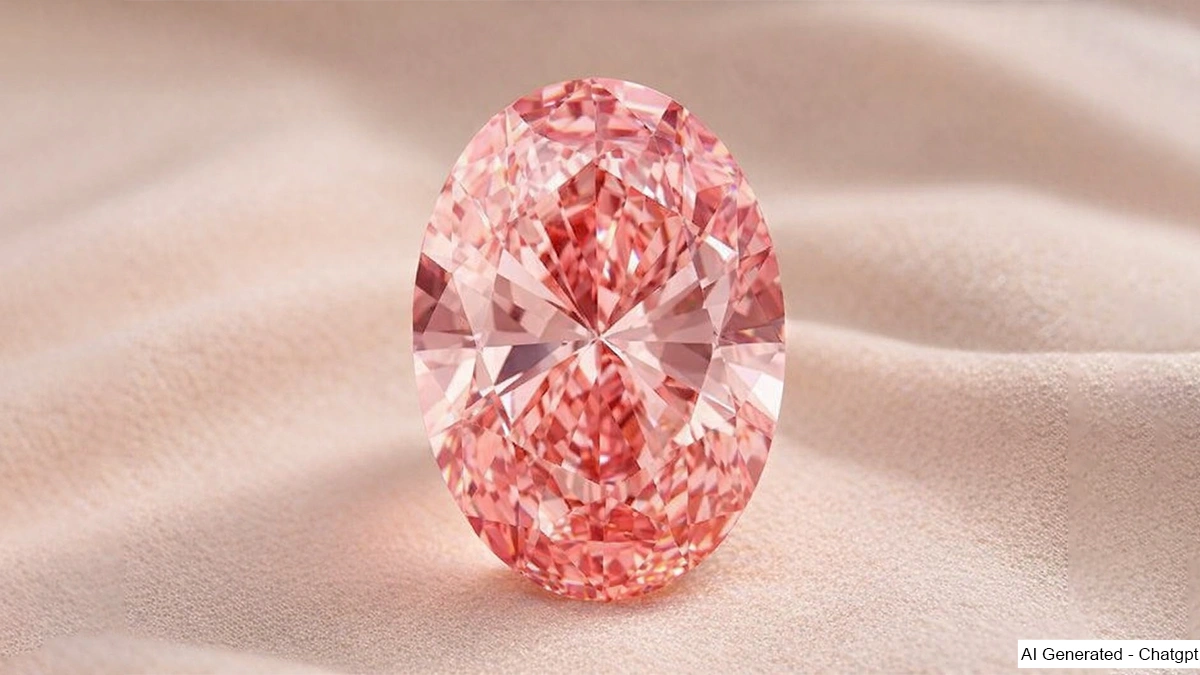
“Shine bright like a diamond” — Rihanna’s lyrics never truly hit me until I discovered the second‑largest flawless fancy diamond. Have you seen the Pink Star? It’s more than gorgeous; it’s simply phenomenal! Its beauty proved its worth when it sold for a staggering $71.2 million at a Hong Kong auction in April 2017.
This flawless pink diamond weighs 59.60 carats, about the size of a strawberry! According to Tom Moses, executive vice president of the Gemological Institute of America (GIA), the size of this vivid stone is a true freak of nature. And he’s right. The Pink Star is only one chapter in the dazzling story of colored diamonds. There are more wonders in fancy gems that are certainly rare treasures. So, are you ready to explore them? Let’s dive in!
The Story Behind the Pink Star’s Creation
The original rough diamond was unearthed by De Beers in Botswana in 1999, one of the richest sources of premium‑quality diamonds. Steinmetz Diamonds meticulously cut the gem over nearly two years. During the process, the 132.50‑carat rough stone was cast in epoxy more than 50 times to create shapes for experimenting with different cuts. After two years of toil, the diamond reached 59.60 carats, becoming the world’s second‑largest flawless fancy diamond.
The diamond entered the limelight in 2003 as the ‘Steinmetz Pink,’ when Helena Christensen showcased it at an event. Four years later, the pink diamond was sold to a Hong Kong jeweler. But this story has twists. When Steinmetz offered the gem at Sotheby’s Geneva sale in 2013, it sold for $83 million. The buyer, New York diamond cutter Isaac Wolf, defaulted on the payment. Since Sotheby’s originally guaranteed $60 million on the stone, they had to acquire the pricey pink gem. The auction house was fortunate that the stone’s mesmerizing size and rare beauty made it highly popular.
Later, when Sotheby’s displayed it in April 2017, a bidding war began among three players. Finally, Chow Tai Fook, a Hong Kong‑based luxury jeweler, claimed the treasure and named it CTF Pink after the company’s founder and initials.
The Rarity of Vivid Pink Diamonds
The Argyle mine in Australia was the world’s main source of pink diamonds. Mining continued for 30 years, supplying about 80% of fancy gems. The mine eventually ran empty and closed in 2020, making the supply of pink diamonds rarer and more sporadic.
There are many folktales and myths about the origin of these pink stones. One tale says they are the crystallized tears of Aphrodite, the Greek goddess of love. In Australian folklore, a legend attributes them to the scales of the giant mythical barramundi fish. Such stories have circulated for centuries, but the real truth is more complex; it’s nature’s magic. Fancy diamonds owe their color to the effects of intense heat and pressure deep within the earth.
Such an extreme atmosphere distorts the crystal lattice, changing light absorption and reflecting pink hues instead of green. Yet the formation remains a mystery and an intriguing subject for scientists worldwide. Of all diamonds across the globe, only a small percentage display this level of intense pink hue. Therefore, the Pink Star is the largest known flawless pink diamond on the planet.
The Dazzle of 2003 Exhibition of Fancy Diamonds
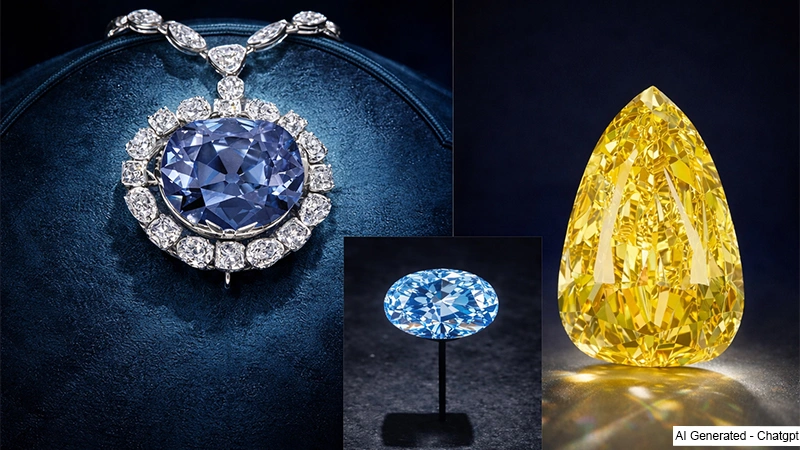
In the summer of 2003, an exhibition titled “The Splendor of Diamonds” opened at the Smithsonian Museum of Natural History in Washington, D.C. The Pink Star diamond was the main highlight of the show. At the event, they placed the pink beauty beside another rare and extraordinary gem — the Hope Diamond. This 45.52‑carat, deep‑blue, cushion‑cut stone has a mysterious origin in India and is surrounded by the legend of a curse. The exhibition featured seven of the world’s most exceptional and rarest diamonds.
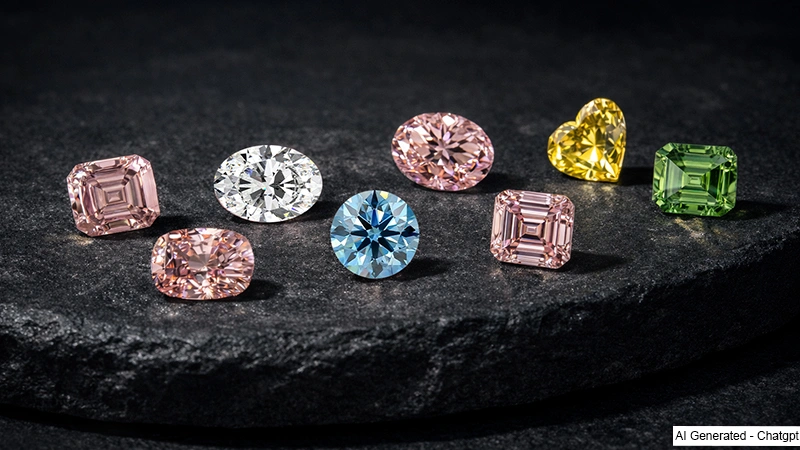
Visitors also saw the De Beers Millennium Star for the first time. Although colorless, its 203.04 carats made it impossible to ignore. The Heart of Eternity, a 27.64‑carat, heart‑shaped, fancy vivid blue diamond, drew admiration. The Moussaieff Red, at 5.11 carats, the largest known red diamond, also stood out. The 5.54‑carat Harry Winston Pumpkin diamond was on display. It was the same stone Halle Berry wore in a ring when she won her Best Actress Oscar in 2002. Then came the Allnatt, a 101.29‑carat yellow diamond and the Ocean Dream, a 5.51‑carat gem, Earth’s largest blue‑ green diamond.
The Pink Star again took center stage from July to November 2005 at the “Diamonds” exhibition in the Natural History Museum in London. For five months, the dazzling showcase attracted tens of thousands of visitors.
The Pink Star Gem and Its Peers
The Pink Star stole the spotlight with its unmatched quality, price and size. Other premium‑quality gems appeared at auctions but never came close. The Winston Pink Legacy, with its 18.96‑carat vivid hue, sold for $50.7 million at Christie’s in November 2018. The Graff Pink, a 24.78‑carat fancy intense stone, achieved $46.1 million at Sotheby’s in November 2010.
Among other notable sales, the Princie, a 34.65‑carat pink gem not rated as vivid, brought $39.3 million at Christie’s in April 2013. The Pink Promise, weighing 14.93 carats, fetched $32.5 million at a Hong Kong auction in November 2017.
The story of rare pink treasures continued. The Williamson Pink Star, an 11.15‑carat fancy vivid stone, sold for $57.7 million at Sotheby’s Hong Kong in 2022. In June 2023, the Eternal Pink, a 10.57‑carat purplish gem, made headlines when it sold for $34.8 million.
The Bold and Beautiful: Largest Fancy Diamonds
Remember Katy Perry’s “Dark Horse” music video, where an Egyptian prince handed her a large pink gem? That was only a prop, but a real stone surpasses the Pink Star in size: the Noor‑Ul‑Ain. Weighing around 60 carats, it originated from India’s Golconda mines and now it’s a part of the Iranian Crown Jewels. In 1851, Naser al‑Din Shah exhibited the Darya‑i‑Noor, the larger companion to the Noor‑Ul‑Ain, intending to show it to Queen Victoria during her visit to Persia.
In 1958, Empress Farah Pahlavi wore the gem in a stunning Harry Winston tiara. Today, it remains preserved at the National Jewelry Treasury in the Central Bank of Iran, Tehran.
That’s the story of one of the largest pink gems. But what about other fancy stones? If the Pink Star is the second‑largest flawless, the Golden Canary ranks first. This massive 303.10‑carat deep brownish‑yellow stone, once known as “The Incomparable,” is recognized by GIA as the biggest flawless jewel. Found in the Democratic Republic of Congo in the early 1980s, its rough form weighed 407.38 carats. After faceting , it gained a sparkling shape that enhanced both hue and brilliance. In 2022, Sotheby’s sold it for $12.4 million.
Speaking of blue treasures, the Oppenheimer Blue, a 14.62‑carat vivid stone, became the most expensive jewel at auction in May 2016. However, in April 2017, the Pink Star surpassed it in both beauty and carat weight. Named after its former owner Philip Oppenheimer, it sold at Christie’s for $57.5 million.
Other honorable mentions include:
- The Delaire Sunrise, an 118.08‑carat square emerald‑cut vivid yellow gem.
- The Wittelsbach‑Graff, a 31.6‑carat blue stone.
- The Empress Rose, a 70.39‑carat internally flawless light pink gem, is considered among the rarest.
- The Imperial Blue is a 39.31‑carat flawless, fancy pear‑cut, vivid blue jewel. It was unveiled in 1984.
- And the Star of Bombay, a 47.39‑carat emerald‑cut yellow stone acquired in 1974, is now owned by Laurence Graff.
Forever Sparkle
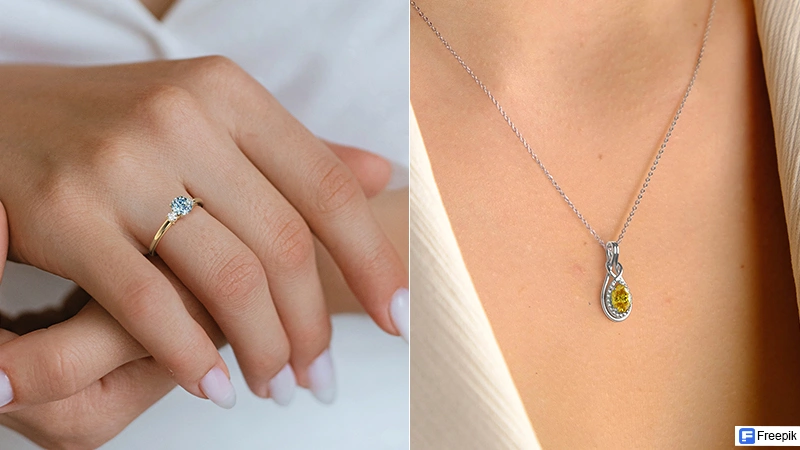
The brilliance of a diamond never fails to capture our hearts. It is truly a forever gem, not only a girl’s best friend but also a treasure that mesmerizes with its fancy hues. Whether it’s the Pink Star or the Golden Canary, these stones remain a testimony to the beauty, rarity and enduring value of nature’s wonders.
So, while you’re dazzled by the sparkle, it’s also the perfect time to choose a piece or two from a reputed jeweler. And what could be a better place than GemsNY? Discover their customers’ stories in the GemsNY Reviews and find your sparkle today.
FAQ
Hong Kong–based luxury jeweler Chow Tai Fook Enterprises owns the Pink Star. They purchased it at Sotheby’s Hong Kong auction for $71.2 million.
Yes. Natural pink diamonds are exceptionally rare and rank among the most expensive jewels. They often fetch millions of dollars per carat, far exceeding the value of white stones.
Australia’s Argyle mine supplied about 80% of the world’s pink diamonds, famous for their vivid hues. The mine closed in 2020, leaving supply scarce. Other sources include South Africa, Brazil, Russia and India, but none match Argyle in color intensity or scale.
A pink stone differs from a regular white gem primarily because of its rare hue. Extreme pressure and heat within the Earth distort the crystal structure at a microscopic level, and those distortions create the pink color. White stones, by contrast, show their value through colorless purity, graded on the D to Z scale.
Famous pink gems include the Lulo Rose, Noor‑Ul‑Ain, Graff Pink and Williamson Pink Star. While remarkable, they do not match the premium quality of the Pink Star, the second‑largest flawless fancy gem.
Red diamonds are the rarest of all natural stones, even rarer than pink or blue. Fewer than 30 are known to exist worldwide, making them incredibly valuable to collectors.
Yes. Some myths claim pink gems are the crystallized tears of Aphrodite, the Greek goddess of love. Australian folklore connects them to the shimmering scales of a mythical barramundi fish.
Yes. To preserve their hue, they require regular care. Professional inspections are important, along with gentle home cleaning using a soft brush and lukewarm soapy water. Also, always store them in a padded box when not in use.
To highlight its vivid color and sparkle, a three‑stone setting on a platinum or white gold band works best. Rose gold is also popular for enhancing the gem’s romantic hue.
At GemsNY, you can explore a wide collection of fancy gems at prices to suit every budget. Each purchase comes with an authenticity certificate.
Lab‑made diamonds are conflict‑free, ethical and sustainable. They are also more affordable, allowing buyers to choose larger carats without the premium cost of natural stones.