
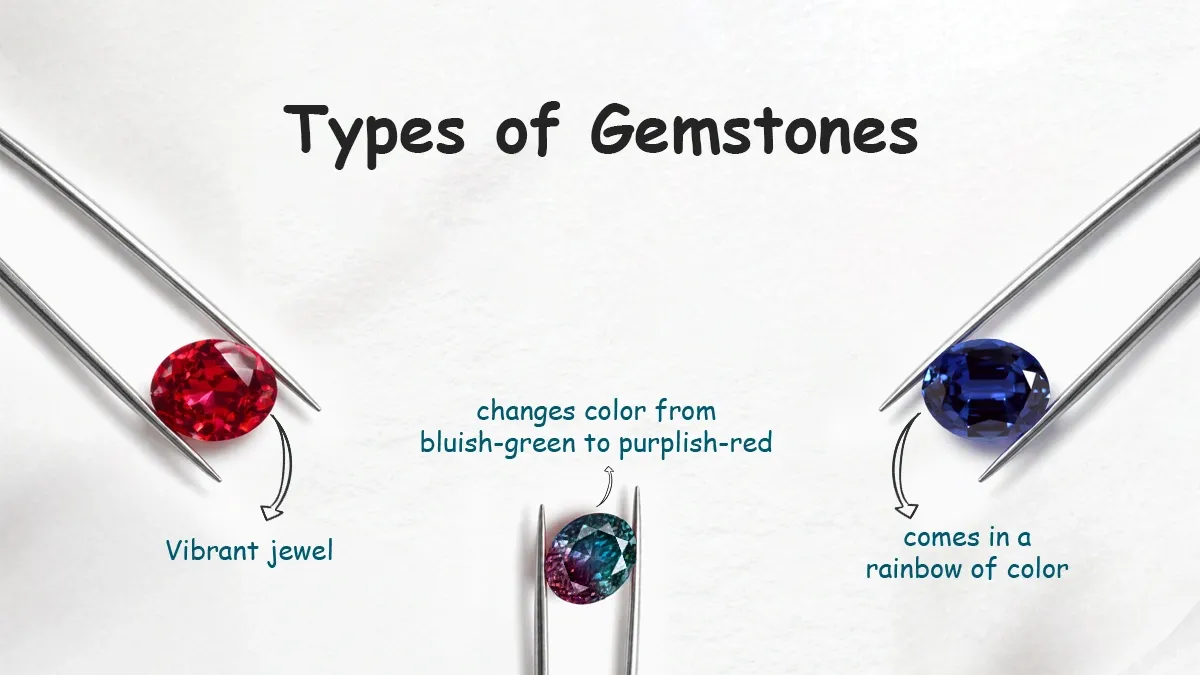
Have you ever admired a tray of colorful gemstones and wondered why one specific stone calls to you while others don’t? You might love them all, but why does a single gem feel fundamentally different from the rest?
That feeling is not random. It is the result of a stone’s unique DNA defined by its origin, chemistry and rare optical traits that strikes a chord with yours.
Colorful gemstones are far more than just beautiful pieces of jewelry. They are expressions of personality, craftsmanship and long-term value. However, the true magic happens when you move beyond mere admiration. The moment you understand how gemstones are categorized based on their physical properties, rarity and light performance—your entire buying experience shifts from guessing to knowing.
This guide explores the various categories of gems in a clear and detailed manner. By the end, you will not only admire these treasures but also understand the specific traits that define their rarity and properties. Because of this knowledge, you’ll have confidence to choose a stone that isn’t just beautiful, but truly extraordinary. Let’s get started!
What Are Gemstones Really?
They are naturally occurring stones that people cut and polish for use in fine jewelry.
Most jewels form from minerals deep within the Earth after years of pressure and transformation. Some of them come from organic sources such as pearls and amber.
Think of gems as nature’s long game. Time, patience and pressure work together to create something rare and lasting, which explains why jewels carry both beauty and meaning.
Understanding them at this level helps customers evaluate durability, rarity, care needs and long term value, especially when shopping from a trusted jeweler.
Why do Colorful Gemstone Categories Matter to Buyers?
Without understanding categories for gems, shopping for jewelry often feels overwhelming.
Once you understand such categories, everything starts making sense. Instead of relying on hunch or gut feeling, start choosing intentionally, which always feels more satisfying.

Knowledge about various categories helps buyers to:
- Choose stones that are strong enough for their daily routine.
- Understand exactly what they are paying for, with zero confusion.
- Make ethical purchasing decisions by being kind to the planet and people.
- Select jewelry that reflects deep, meaningful symbolism.
When knowledge meets craftsmanship, customers experience confidence and this is what you experience at GemsNY.
Now, let’s jump into the dazzling world of types of colorful gemstones…
1. Precious and Semi-Precious Colorful Gemstones
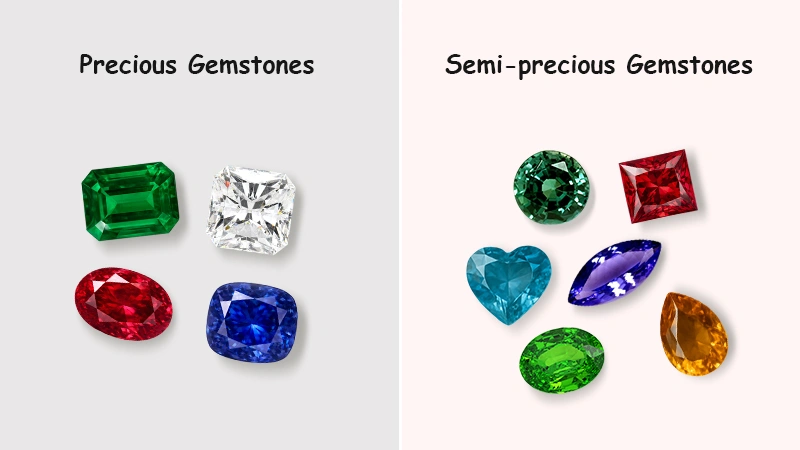
The traditional classification divides colorful gemstones into precious and semi-precious categories.
- Precious gemstones include diamond, ruby, sapphire and emerald. These stones have earned their reputation through rarity, durability and historical significance. Royalty prized them and generations preserved them.
- Semi-precious gemstones include everything beyond that traditional group. Amethyst, citrine, garnet, peridot and tourmaline fall into this category. These types offer exceptional beauty and wider color choices.
Many colorful gemstones are relatively new discoveries and even though they command good prices, they are still not part of the precious category. For example, alexandrite was discovered in the 1830s, and tanzanite was found in 1967.
While the names may sound hierarchical, beauty often depends on personal taste and craftsmanship rather than labels alone. This classification still plays an important role in gemological testing and certification.
2. Categories Based on Mineral Composition
Some stones consist of a single mineral, whereas others are aggregates of several different minerals.
- Single-Mineral Stones: A diamond contains pure carbon, while quartz varieties include amethyst and citrine. Because these stones have a steady chemical structure, they often exhibit consistent durability and brilliance.
- Multi-Mineral Aggregate Stones: Other colorful gemstones are from a combination of multiple minerals. Lapis lazuli and turquoise belong here. These gems are more porous or sensitive to environmental changes due to the different minerals interacting within the same stone.
Hence, understanding what these are made of helps explain how it reacts to heat, wear and time. These rock categories serve as a vital roadmap for performing authenticity checks and providing specialized care recommendations that protect your investment for generations.
3. Classification by Crystal System
Every type has an internal crystal structure that shapes how it reflects light.
Gemologists recognize seven crystal systems:
- Cubic such as diamond and garnet
- Tetragonal such as zircon
- Hexagonal such as emerald and aquamarine
- Trigonals such as ruby and sapphire
- Orthorhombic such as topaz
- Monoclinics such as peridot
- Triclinic such as turquoise
This hidden structure explains why two colorful gemstones may look similar but behave very differently in daily wear. These categories are an indicator of brilliance and durability.
4. Classification by Optical Properties
Some of them interact with light in extraordinary ways.
These types fall into transparent, translucent or opaque categories. Some display rare optical effects that collectors value deeply.
These include:
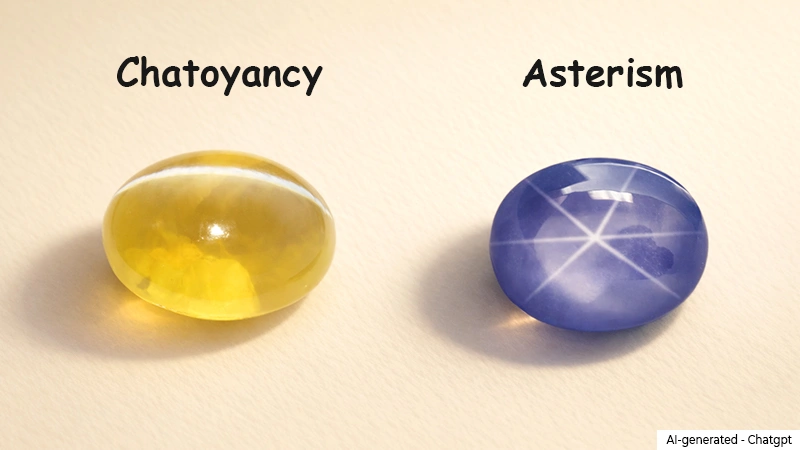
- Asterism seen in star sapphires
- Chatoyancy found in cat’s eye stones
- Play of color in opals
- Color change in alexandrite
These light-driven effects turn these stones into engaging conversation pieces. At GemsNY, these gemstone categories shine in fine jewelry because they create a deeper connection beyond appearance.
5. Color-Based Gemstone Categories
Color often creates the first emotional connection.
Gemstone categories by color include:
- Single color gems such as emerald (green) and ruby (red).
- Multicolor jewels like tourmaline and spinel.
- Fancy color crystals such as yellow diamonds and pink sapphires.
Even though these categories exist, there are no clear boundaries that separate single-colored stones from multi-colored ones. For example, tourmalines come mostly in pink and blue colors but there’s also a variety, watermelon tourmaline, resembling the colors of the fruit. Likewise, emeralds are usually single color but trapiche emeralds exhibit a unique pattern of colors. Sapphires aren’t far behind. Color-changing sapphires can rival alexandrite to deliver the chameleon-like effect.
Color connects instantly with mood and personality, inspiring the choices of many people. Colorful gemstones continue to grow in popularity for custom jewelry designs at GemsNY.
6. Hardness-Based Classification Using the Mohs Scale
Beauty matters, but durability matters just as much for colorful gemstone types.
The Mohs scale ranks gems by hardness:
- High hardness colorful gemstone score between 8 and 10. Diamond, ruby and sapphire handle daily wear with confidence.
- Medium hardness types include garnet and tourmaline.
- Low-hardness jewels include opal and turquoise, which suit occasional wear better.
Hardness score gives a fair idea of how much a stone is resilient to scratching or impact. Two stones with almost similar scores react differently to the same force. For example, emerald, morganite and spinel have similar hardness scores but emerald has something called cleavage, making it more susceptible to crumble under sudden impact.
7. Natural, Synthetic, Treated and Imitation Gemstones
Transparency matters deeply in colorful gemstones.
It builds the essential foundation of trust between a jeweler and a customer.
These fall into four categories.
- Natural ones formed in nature over millions of years. These are the rarest and most valuable stones available.
- Lab-created gems have properties identical to natural stones. But they are created in controlled environments. This is why they offer a more affordable and ethical alternative.
- Treated colorful gemstones are natural stones enhanced via heat or other methods to improve their color or clarity. For some stones, heat treatment is necessary, for example, tanzanite.
- Imitation stones are materials such as glass or something else but not the actual mineral. They only resemble them visually and have no real gem properties. Cubic zirconia and moissanite are the most common types of diamond imitations, and they aren’t glass.
Clear disclosure allows customers to appreciate the bling for what it truly is. Furthermore, leading organizations such as GIA have introduced even stricter digital reports. These reports reveal a stone’s complete narrative, from geographic origin to any enhancements. GemsNY follows these rigorous standards so your trust remains uncompromised and your investment is fully protected.
8. Organic vs Inorganic Colorful Gemstones
Nature creates beauty in more than one way.
- Organic colorful gemstones include pearl, amber and coral. Living organisms create these crystal types over relatively short periods compared to geological time.
- Inorganic gemstones form through geological processes deep within Earth’s crust. Diamond, ruby, sapphire, and emerald belong to this vast category.
This distinction is vital because a stone’s origin dictates its handling requirements. In contrast to durable mineral-based gems, organic stones are often porous. They are highly sensitive to chemicals, perfumes and heat. Ultimately, understanding these origins adds depth to your appreciation. It also explains the need for specialized care and the distinct rarity within these categories.
9. Usage-Based and Cultural Categories of Colorful Gemstones
This type often carries meaning far beyond design.
Popular categories include:
- Birthstones: Your personal bling assigned by fate!
- Zodiac rocks: Sparkle with stones aligned with your stars.
- Healing stones: Little earth treasures with good-vibe energy!
- Investment gems: Tiny and beautiful assets that help your wealth grow!
- Fashion jewelry: Your style sidekicks for that extra pop!
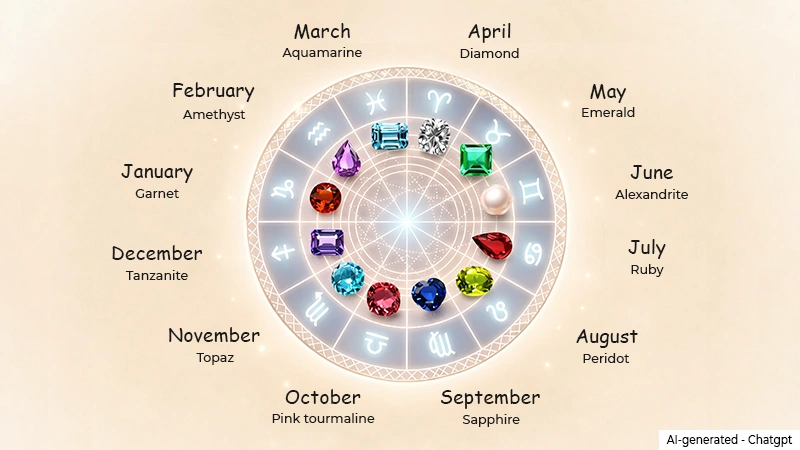
These categories remind us that they carry stories, traditions and beliefs. GemsNY offers curated collections that align with these emotional and cultural connections.
Bring Home Colorful Gemstones
At GemsNY, education forms the foundation of trust, but exploration brings everything to life.
When you understand such categories with clarity, choosing jewelry feels exciting instead of overwhelming. You start noticing details. You feel confident about quality. You connect with colorful gemstones that reflect your lifestyle, values and personal style.
Whether you gravitate toward classic diamonds or feel drawn to vibrant types, exploring gemstone collections at GemsNY turns curiosity into confidence. And if you want something even more personal, we invite you to take creativity into your own hands.
With the “Make Your Own” jewelry option, you are not just choosing a bling. You are shaping a story. Pick the gem that speaks to you, choose the setting that matches your style and watch your vision turn into a piece that feels unmistakably yours.
Because when you design your own piece, the sparkle means more. And the connection lasts longer.
FAQs About Different Types of Gems
It’s a big family! Experts group them in all sorts of fun ways—by what they’re made of, how tough they are, their gorgeous colors, where they come from and even their cultural “superpowers.”
2026 is all about personality and pastels! While the classic “Big Three” (Sapphire, Emerald and Ruby) never go out of style. We’re seeing a huge trend toward dreamy “cool-tone” stones such as aquamarine, morganite and tanzanite. People are also loving the “East-West” setting, which you can browse through our collections.
Think of it as a traditional VIP club for the stones. Historically, only diamonds, rubies, sapphires and emeralds were called “precious”. In contrast, every other beautiful stone fell into the “semi-precious” squad.
Of course. These rocks can be your personal power-ups. Many people choose stones for their meaning or healing properties. For instance, 2026 trends will be a rise in amethyst for peace and morganite for feminine energy. Also, you can find yellow sapphire for confidence and growth.
Absolutely! They aren’t fakes, but they’re kind of twins. Lab-grown stones have the exact same DNA (physical and chemical properties) as natural ones. It’s just that they get a head start in an advanced lab instead of growing inside the earth.
If you’re wearing them every day, go for the “Tough Trio”—diamonds, sapphires and rubies. They are the strongest of the bunch and can handle all your daily adventures without losing their shine!