Mother Nature has blessed us with many colored and uncolored gemstones. Whether it is a coronation ceremony or tying the knot, these gemstones have always been a significant part of our most auspicious occasions. Yet among such precious gems, diamonds hold a special place. They are the traditional gemstone for everything from weddings to red‑carpet events. The brilliant sparkle of this gem is undeniably alluring. And the journey of diamonds is significant enough to make it an essential part of every jewelry wardrobe.
Have you ever wondered about the fascinating journey a diamond undertakes, from its formation deep within the Earth to adorning your favorite jewel? Well, you will love to explore the intricate process of diamond formation, mining and the path that ultimately leads to the creation of a cherished piece of jewelry. Let’s start!
1. Formation
Diamonds form deep within the Earth’s mantle, approximately 150 to 200 kilometers below the surface. Under immense heat and pressure, carbon atoms fuse in a crystal structure, giving rise to the existence of diamonds. This journey of diamonds typically occurs over billions of years, aided by volcanic activity that carries these precious gems a little close to the Earth’s surface.
2. Source & Mining
There are two primary sources of diamonds: alluvial deposits and kimberlite pipes.
– Alluvial deposits: Flow of water in creates alluvial deposits in riverbeds and on floodplains by bringing both organic and inorganic materials. Sometimes the water brings diamonds also to the deposits. Miners extract these diamonds by diverting the water flow and using various techniques such as panning, sluicing and dredging to collect the diamond-bearing gravel.
– Kimberlite pipes: Kimberlite pipes are volcanic rock formations and they are the primary source of diamonds. Miners identify these pipes and extract diamond-rich ores through open-pit mining or underground mining. The extracted ore is then transported to processing plants for further extraction.
3. Separation and sorting of Diamond
The next step in the journey of diamonds includes the processing of the crystals. Once the stones reache the processing plant, it undergoes several stages to extract the precious gemstones effectively. The processing techniques include:
– Crushing: With the help of heavy equipment the ore is crushed into smaller pieces to facilitate the extraction process.
– Screening: The crushed ore is then screened to separate the larger pieces from the smaller ones.
– Dense Media Separation (DMS): This technique uses a heavy liquid to separate the diamonds from the remaining material based on their density. Since diamonds are denser than the liquid, they settle at the bottom whereas lighter materials stay on top.
– X-Ray Sorting: X-ray technology is employed to further separate the chunks containing diamonds from other materials. X-rays detect the diamonds’ unique atomic structure, making it possible to identify and separate diamond-containing chunks accurately.
– Final Sorting: After the separation of the diamonds, artisans sort them based on various criteria such as size, shape, color and quality. This process is crucial in determining whether a diamond is suitable for use in jewelry.
4. Diamond Cutting and Polishing
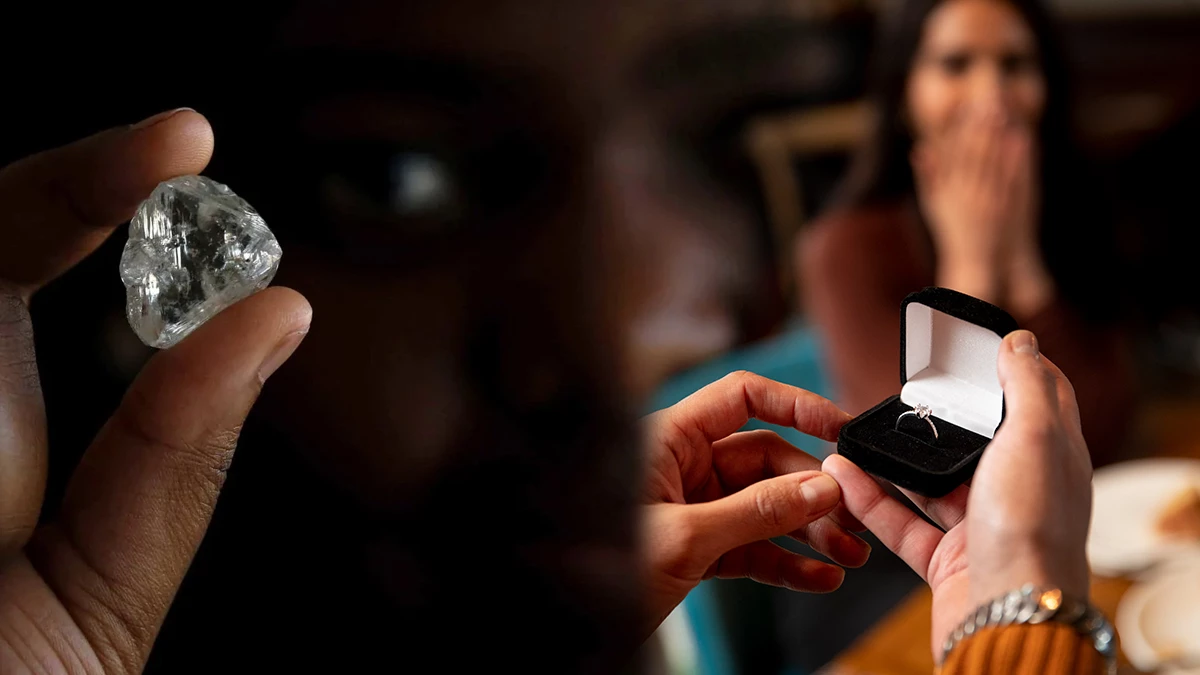
After the sorting process, technicians send the rough diamonds to highly skilled lapidists. These artisans meticulously analyze each stone to determine the most suitable cut that will maximize its brilliance and beauty. The cutting process involves shaping the diamond into various facets to enhance its light reflection and refraction qualities. Finally, the diamond undergoes a polishing stage to achieve a smooth, glossy finish.
5. Treatments
Throughout the entire journey of diamonds, these gemstones can undergo various treatments to enhance their appearance or improve their color. Jewelers usually indicate these treatments in the documentation. It is worth noting that some consumers prefer untreated natural diamonds. So, not all the loose diamonds go through these treatments, some of them proceed for grading and designing right after cutting and polishing. Here are some common treatments applied to diamonds.
a. Laser Drilling
Laser drilling involves use of a laser beam to create tiny channels or tunnels within a diamond to reach inclusions (internal flaws). Once the inclusions are accessed, they can be treated with acid to either remove them or make them less visible. Laser drilling is primarily used to treat dark and near to surface inclusions.
b. Fracture Filling
Fracture filling, also popular as clarity enhancement, is a treatment method artisans use to improve the appearance of loose diamonds with visible fractures or cracks. A filler substance, such as glass or resin, is injected into the fractures to make them less noticeable. This treatment can enhance the diamond’s clarity and overall visual appeal so that it can look stunning in a diamond engagement ring. While understanding the journey of diamonds, it’s important to note that fracture-filled diamonds require special care and attention during cleaning or repairs.
c. High-Temperature Annealing
High-temperature annealing involves subjecting diamonds to high temperatures to alter their color. The treatment is important for removing, changing or enhancing the overall color of the diamond. The process is carefully controlled to prevent damage to the stone.
d. Coating
You might wonder why there’s coating involved in the journey of diamonds. The simple answer is that diamond coatings involve applying a thin layer of colored substances. This is similar to plastic or chemicals, applied to the surface of a diamond. The use of coating can dramatically improve the diamond’s color or create unique optical effects. For instance, a light blue coating on a yellow diamond can enhance its overall appeal and make it look more colorless. However, coatings are generally not permanent and may wear off over time, requiring reapplication. So, if you find your diamond ring getting dull with time, then the reason could be the loss of coating.
e. Irradiation
Irradiation is a treatment process where technicians expose diamonds to high-energy radiation, such as electrons or neutrons. This treatment can alter the diamond’s color by modifying the arrangement of atoms within the crystal lattice. Also, irradiated loose diamonds often go through a further enhancement process called high-temperature annealing to stabilize the color change.
6. Diamond Grading and Certification
Grading & certification are important especially from the end-user’s standpoint. To provide transparency and assurance to consumers, diamonds have certain grading and certification from established gemstone assessing bodies such as GIA & AGS. These laboratories evaluate the diamond’s 4Cs: carat weight, color, clarity and cut. In the journey of diamonds, the grading report, commonly known as a diamond certificate, plays a crucial role. It mainly includes detailed information about the diamond’s characteristics and serves as a testament to its quality.
7. Designing and Crafting
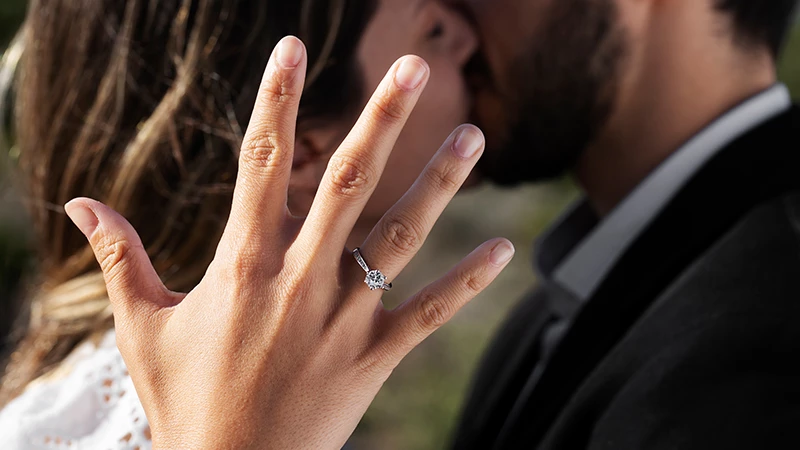
Once the diamond processing completes, cut and graded, they becomes ready to attach to beautiful jewelry pieces. Designing and crafting possibilities are limitless. Our jewelry designers work closely with clients to conceptualize and create personalized diamond rings or other jewels.
From selecting the metal to incorporating intricate details, the designing process ensures that the final piece expresses the wearer’s style and personality. As the final step in the journey of diamonds, these well-crafted jewels, especially in engagement rings, convey millions of sentiments and never fail to touch the hearts of their admirers.
The Sparkling Journey of Diamonds
The journey of a diamond from its formation deep within the Earth to becoming a part of your favorite diamond ring is an extraordinary tale of nature’s wonders and human efforts. The intricate processes of mining, processing, cutting and polishing bring these precious gems to life, allowing us to cherish their beauty for generations to come. So, the next time you admire a diamond engagement ring or any other jewel with a diamond centerpiece, remember the incredible journey it has undertaken to find its way onto your bling.