
Last Updated on July 6, 2026
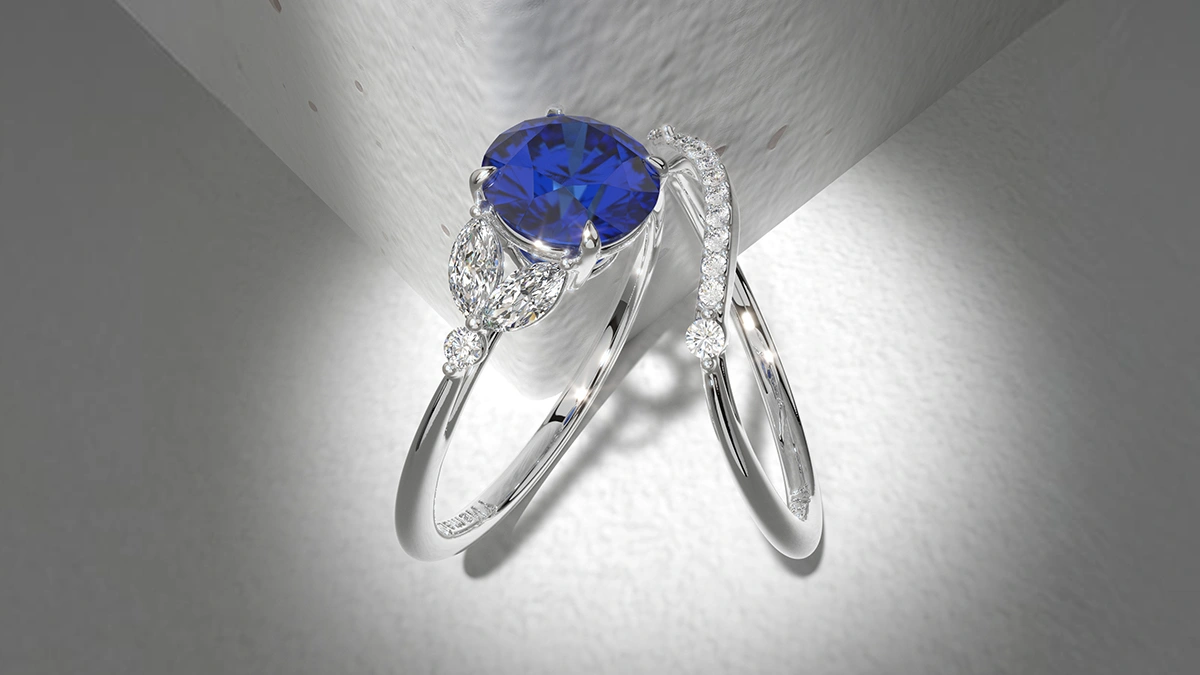
People tend to fall in love with sapphires the moment they see them – often, in three seconds or less.
Someone may walk in with the intention to browse diamonds, but after being introduced to a luxurious blue sapphire, they may be persuaded. A sapphire may not rival a diamond’s brilliance, but it offers something entirely different. It is more intriguing, more mysterious and undeniably regal. While sapphires may appear similar, the quality can vary quite a bit and this affects the pricing significantly. Unlike diamonds, pricing a fine sapphire is anything but straightforward.
This brings us to the question almost everyone wants to ask:
How much does a 1 carat natural blue sapphire actually cost?
There is no single answer. The cost of a 1 carat natural blue sapphire depends on several factors, such as whether or not a stone has been treated, the saturation of color, the distribution of color, the clarity and its origin.
As a general guide, a fine quality heated blue sapphire typically costs between $700 and $2,500 per carat. Fine unheated natural blue sapphires cost approximately $2,500-$6,000 per carat. According to the International Gem Society, unheated pure blue sapphires can range between $2,000 and $10,000 per carat depending on their size and overall quality. The Gemological Institute of America also emphasizes that color is the single most important factor in determining a sapphire’s value, with saturation and tone having the greatest impact.
A sapphire is a truly exceptional gemstone, however, they are not created equal.
The biggest mistake that first-time buyers make is assuming that a “1 carat” tells them all they need to know. In reality, this is very limited information.
Weight is not enough to determine the value of a gemstone. To understand the value of a sapphire, one must also understand the color, brilliance, cut, and origin.
A sapphire from Sri Lanka, Burma, Kashmir or Madagascar will command a higher price than a similar stone from a different origin.
GIA explains that most valuable blue sapphires are those that have strong to vivid saturation with a velvety blue to violetish blue color in medium to medium-dark tones. Pale, dark or grayish blue lowers the value.
Personal recommendation: do not buy the darkest sapphire simply because it seems “royal blue” in the seller’s listing photo. There is no official “royal blue” grading standard for sapphires, and overly dark stones, – when seen under indoor lighting, will appear almost black.
You want strong blue, not necessarily navy.
Heat vs Unheated: A Must-Know Conversation for Every Buyer
Most natural sapphires on the market today have been heat treated Heating is a long established and widely accepted practice that enhances the color and clarity of the gemstone, without affecting it’s authenticity.
However, unheated sapphires are significantly rarer and as such, they command a higher premium.
That is why if you are comparing two similar sapphires and one costs $1,200 and the other costs $4,800, it is very important to check if the stones are heated first. The second one might be unheated or it may have, better saturation, better clarity, a better cut, or it may certified by a more accredited laboratory.
If you are spending more than $2,500 for your sapphire purchase, an independent certification is highly recommended.A grading report from a reputable laboratory provides confidence in the gemstone’s authenticity, treatments, and quality.
As for GemsNY, we recommend purchasing sapphires from a trusted jeweler who provides authenticity documentation, since it is virtually impossible for an an untrained eye to determine if a sapphire is natural or not.
Price Range of Yellow Sapphire
Yellow sapphire deserves far more attention than it usually receives.
While a blue sapphire may be the most famous of the sapphire family, a yellow sapphire is it’s cheerful counterpart – brilliant and full of character.
A natural 1 carat yellow sapphire is generally less expensive than a blue sapphire of comparable size and quality. Depending on how you define practicality, a price range for most natural yellow sapphires is around $300 to $800 per carat, while fine vivid stones may cost even more.
According to the GIA, the most valuable yellow sapphires display a lively yellow to orangey yellow color with vivid saturation. Pale sapphires are not as desirable, as well as those that are too brown or greenish.
For buyers looking for a yellow diamond, a yellow sapphire can serve as an excellent alternative. As noted by GemsNY, yellow sapphires offer a similar warm, sunny appearance like the yellow diamond, but at a fraction of the price.
Is Sapphire Good for Everyday Wear?
Absolutely! This is one of the main reasons sapphire is a great choice for engagement rings.
Sapphire blongs to the mineral family corundum, which also includes ruby and has the rating 9 on the Mohs hardness scale. According to the Gemological Institute (GIA), sapphire’s hardness contributes to its outstanding durability, while GemsNY also notes that blue sapphire is well suited for everyday wear.
This does not mean it is indestructible. One should not garden, work out, or do streneous activities while wearing a sapphire ring, but for daily activities sapphire is one the best colored gemstone choices in terms of durability.
Budget Recommendations
For 1 carat natural blue sapphire ring, the following budget range is recommended:
$700-$1,500: A well cut attractive heated sapphire for everyday wear.
$1,500-$2,500: A heated stone with strong saturation, improved clarity and good transparency.
$2,500-$6,000: An untreated sapphire with good clarity and transparency.
$6,000-$10,000: Heirloom quality untreated sapphire with eye clean clarity,and excellent color saturation.
For a 1 carat natural yellow sapphire, one can expect the following range:
$300-$500: Heated stone with a softer hue, or slight oversaturation.
$500-$800: Medium yellow color, better clarity
$800 Up: Untreated, excellent clarity, stronger saturation.
Please note that pricing will vary depending on the exact quality selected.
Buyer’s Checklist Before Purchasing a Sapphire
Prior to purchasing a sapphire, it’s worth considering a few key questions to ensure you are getting the best value:
Is the sapphire natural or lab-created?
Has it been treated in any way, such as heat treatment, diffusion or other?
Is it certified by a reputable gemological lab?
Does the color remain beautiful in daylight and indoor lighting?
Is the stone well cut or does it look noticeably “flat” and “windowed”?
Does the seller offer a return policy in the event the stone does not meet your expectations?
Final Words
A beautiful and worthwhile investment, especially for those that value color and character more than brilliance.
Whether you choose a deep blue sapphire with its royal elegance or a vibrant yellow sapphire with its warm, radiant character, the right stone can be treasured for generations.
Take your time, compare sapphires, ask about treatment and check the color in different lighting. Once you find the stone that appeals to you, you will know.


