
Last Updated on July 3, 2026
Diamonds Are a Girl’s Best Friend! Sure, but to be honest, rubies have been stealing hearts away before Marilyn sang the note. However, did you know that not every ruby comes from deep inside the earth? Some shine straight out of a lab, and no, they don’t look any less fabulous. So, let’s begin the ultimate showdown: lab grown ruby vs. natural ruby.
While one serves us with modern, budget-friendly brilliance, the OG one brings old-school luxury drama that’s hard to ignore. Thinking about a ruby ring or other ruby jewelry but confused about what to pick? You’re not alone. Let’s break it down and figure out which ruby truly deserves to catch your eyes.
What Are Lab Grown and Natural Rubies?
Let’s clear the confusion before we pick sides. A lab grown ruby and a natural ruby may look like twins, but their journeys differ big time. Both share the same chemical composition and that rich red sparkle everyone loves. A natural ruby forms deep inside the earth over millions of years, building its character under extreme heat and pressure. Talk about a slow glow-up!
On the contrary, a lab grown ruby forms in a controlled environment, where experts recreate the exact geological conditions using advanced technology. The result is a gemstone that looks just as stunning but skips the million-year wait. So, whether your jewelry is prettied with genuine ruby or lab made one, the real difference starts with where the story begins.
How to Tell them Apart?
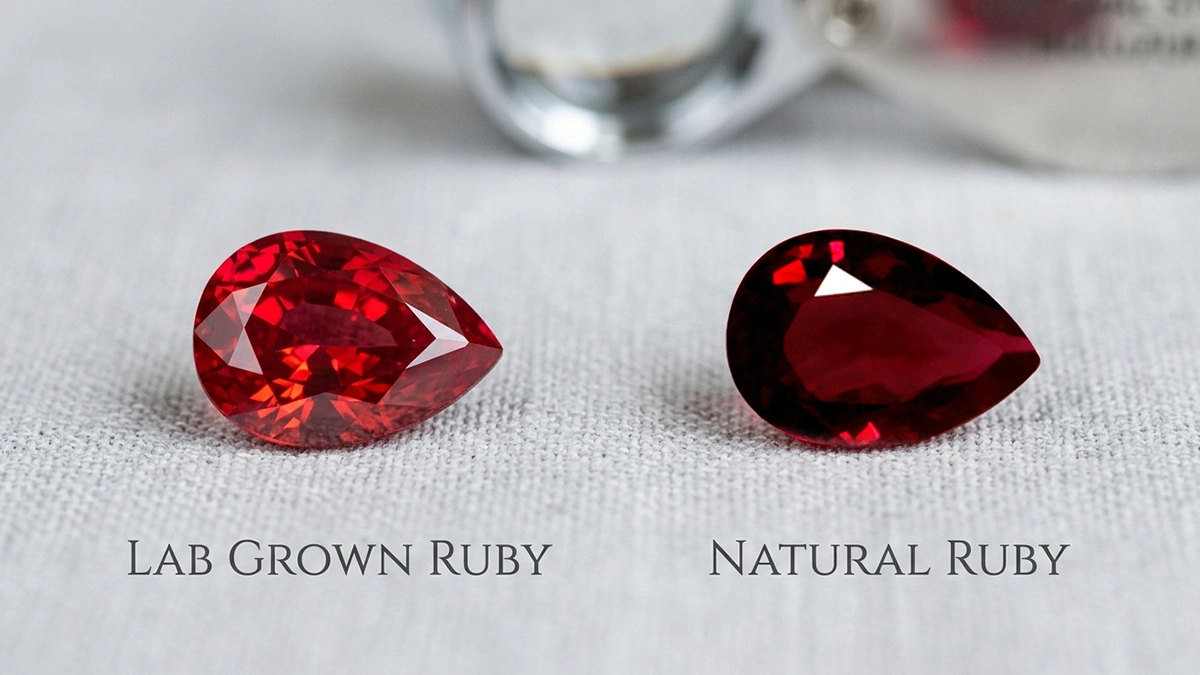
Here’s where things get interesting. At first glance, a lab grown ruby and a natural ruby look almost identical. You will find the same rich red hue, same eye-catching sparkle, same “I need this in a ruby ring right now” energy. Even trained eyes sometimes need specialized tools to tell them apart. However, the real difference hides in tiny internal features called inclusions.
Natural rubies often carry small imperfections, like fingerprints from nature. Now, if we talk about lab grown rubies, they tend to look cleaner and more flawless. But without a microscope and a gem expert on speed dial, you won’t spot the difference. Thus, if you’re choosing based on looks, both options bring serious glam to your jewelry game.

The Price Gap Between the Two
Now let’s talk about money because your wallet deserves a say too.
A natural ruby often comes with a premium price tag, thanks to its rarity and million-year origin story. The finer the color and clarity, the higher the cost climbs. On the other hand, a lab grown ruby delivers the same stunning look without the jaw-dropping price. You get more size, better clarity and serious sparkle for a fraction of the cost.
Hence, if you want a bold ruby ring without breaking your bank, lab grown rubies make a pretty convincing case. It all comes down to whether you value rarity or smart spending more. All in all, both options offer beauty! It’s just a matter of how much you’re willing to invest in the story behind the stone. Choose wisely, because your jewelry should feel as good as it looks.
Which One Lasts Longer?
If you’re planning to wear your ruby ring or other ruby jewelry every day, durability matters.
The good news is both lab grown rubies and natural rubies score a solid 9 out of 10 on the Mohs hardness scale. This means they resist scratches and handle daily wear like pros. You won’t have to baby sit either option; they both bring strength along with sparkle. The only slight difference comes from natural inclusions.
They may make some natural rubies a bit more prone to tiny internal weaknesses. Lab grown rubies usually have fewer inclusions, so they often offer more consistent durability. Either way, you’re getting a gemstone that can keep up with your everyday style without losing its shine and brilliance for years.
Symbolism and Birthstone Connection
Rubies have long symbolized love, passion, power and protection.
As the July birthstone, ruby holds a strong emotional connection for those born in that month. Therefore, ruby jewelry is often gifted to celebrate love and life milestones. A natural ruby carries this symbolism through its long formation journey deep within the earth. That’s why, many people associate it with deeper emotional and spiritual value.
A lab grown ruby shares the same physical and chemical properties, so it still qualifies as the July birthstone. However, some buyers feel that it lacks the historical and natural journey that gives traditional symbolism its depth. In the end, the meaning you attach to your gemstone is what truly defines its significance.
Ethical and Environmental Impact
Modern buyers care about more than just sparkle.
A natural ruby often involves mining, which can impact the environment and raise ethical concerns depending on sourcing practices. Responsible mining exists, but it takes effort to verify. A lab grown ruby skips the digging process altogether. It forms in a controlled setting, which reduces environmental disruption and offers better traceability.
That makes it a popular choice for buyers who want guilt-free glam. So, if sustainability and ethics matter to you, lab grown rubies often take the lead. Also, it offers greater transparency in sourcing, which matters more than ever today. This makes the entire buying experience feel more informed and intentional.
Which One Should You Choose?
The choice between a lab grown ruby and a natural ruby comes down to what matters most to you.
If you value rarity, tradition and the idea of owning something that has history, a natural ruby is your best bet. But if you prefer affordability and a modern approach to fine jewelry, a lab grown ruby makes a smart choice. Both options offer the same stunning color and durability, so you’re not compromising on beauty either way.
Whether you’re picking natural ruby jewelry or lab grown one, each piece has its charm. All in all, your decision should reflect your priorities, your budget and your personal style. So, take a moment to think about what truly matters to you before making the final call. After all, the best choice is the one you’ll love wearing every single day.
Lab Grown Ruby is Rewriting the Narrative
The difference between a lab grown ruby and a natural ruby isn’t about looks; it’s really about the story it conveys.
While a natural ruby carries a sense of rarity and tradition, a lab created ruby reflects innovation and accessibility. Neither is wrong; they simply speak to different preferences and priorities. So, no matter whether you lean towards timeless luxury or modern practicality, your ruby jewelry should feel right to you.
Explore unique ruby rings, pendants, earrings and more at www.gemsny.com, where craftsmanship meets creativity in every setting. If you’re still unsure, check what other buyers are saying on GemsNY reviews. And to stay updated with the latest jewelry trends, don’t forget to follow GemsNY Press.
FAQ
Not at all. Lab grown rubies keep their color just like natural ones. The red stays vibrant for years, even with regular wear. So, you don’t have to worry about it looking dull later; it’s built to shine long-term.
Yes, and that’s actually a big plus. Since lab grown rubies are more accessible, you get more flexibility with size, shape and design. Thus, if you have a specific ruby ring or pendant idea in mind, it’s much easier to bring it to life.
Absolutely! They’re strong enough for daily wear and don’t need special treatment. You can wear them to work, dinners or even while traveling without constantly worrying. They fit right into your everyday style without extra effort.
Not really. Sometimes natural rubies have visible inclusions, whereas lab grown ones can look cleaner. So, it really depends on what you prefer—raw, natural character or a more flawless finish. Both have their own kind of appeal.
Honestly, no. Without proper tools or expertise, most people can’t tell the difference just by looking at the stone. Therefore, if you’re worried about appearances, don’t be. Your jewelry will look just as stunning either way.

