Let’s fall in love with a piece of jewelry, especially when it tells a story. Each shimmering piece carries ornate designs and brings romance, artistry and history. Yes, we are talking about vintage jewelry, a classic reflection of our values and emotion through its beautiful and antique designs.
When we throw light on vintage jewelry, we’re going beyond complimenting the sparkle of gemstones or the tiny details. We are walking through a history of art that spans centuries. Cultural changes and unique styles shaped its growth through different eras.
And now it’s time to learn about and live the beauty of jewelry we have admired for centuries. It’s time to feel the sentiments that we have seen in iconic pieces, which are adorned as subjects in paintings and displayed in museums. Join us on this journey through classic jewelry eras, from its beginnings to the modern era. Also, understand how these vintage treasures influence the modern jewelry we wear today.
Breaking down Vintage Jewelry Eras
Jewelry styles evolve with time, culture and trends. Each era conveys a unique moment in history and craftsmanship of that particular period. Understanding these helps you appreciate these diverse ranges of styles that capture the essence of both vintage and modern aesthetics.
Georgian Era (1714-1837)
The Georgian era was a time of luxury and fancy jewelry designs. Named after kings George I to George IV, this period saw the rise of very detailed and ornate pieces. This era has three main phases.

1. Early Georgian Period (1714-1760)
This era celebrated baroque style which featured artistic designs, symmetry and lacy aesthetics, incorporating motifs like ribbons and bows. These designs were inspired by nature, including flowers, leaves and animals. Georgian jewelry also marked the use of foil-backed gemstones, which enhanced their shine in candlelight. Gemstones like diamonds (often hand cut into rose and old mine cut), pearls and colored gemstones were commonly used.
2. Mid-Georgian Period (1760-1780)
During the Mid-Georgian period, jewelry became lighter and more graceful. While designers still used older patterns like bows and flowers, they began to favor asymmetrical looks. Because of new glass technology, colorful paste stones and shiny foiled gems became very popular.
At the same time, symbols started to matter more. People wore snakes to show eternal love, along with hearts and crosses. In addition, sentimental jewelry became a huge trend. Friends and lovers often exchanged gifts with hidden messages or “lover’s eyes” painted on them. These special pieces helped people share their deepest feelings through vintage jewelry.
3. Late Georgian Period (1780-1837)
In this period, jewelry was influenced by the Neoclassical movement, featuring designs inspired by ancient Greece and Rome. Cameos, intaglios and classical motifs like laurel wreaths, sphinxes, pyramids, papyrus leaves and acanthus leaves were common. Moreover, mourning jewelry also gained popularity during this period, with black and white designs symbolizing grief and remembrance.
Victorian Era (1837-1901)
The Victorian era, named after Queen Victoria, brought about significant transformation in jewelry design. It marked a time dedicated to religion and love and spanned a considerable time, seeing distinct phases in design.
- Early Victorian Period (1837-1860)
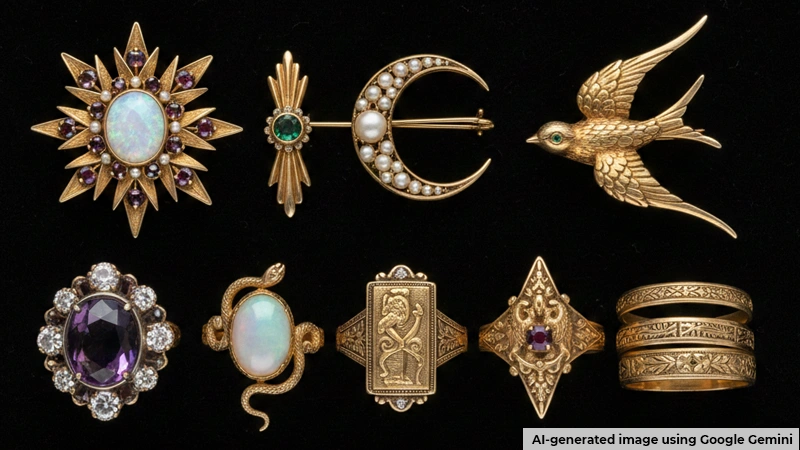
This time marked the Romantic period. Early Victorian era jewelry saw the sentimental and symbolic motifs such as hearts, flowers, snakes and bows, often set with gemstones and pearls. Pieces were often personalized with lockets containing photographs or strands of hair from loved ones. All these represented love, eternity and wisdom. The use of gemstones such as amethyst, garnet and opal became popular during this time.
- Mid-Victorian (1860-1885)
This was a grand period where jewelry designs became more elaborate and incorporated darker gemstones like garnets and amethysts. Victorian era mourning jewelry reached its peak. Black jet, onyx and enamel were used widely to create somber, grave and detailed designs.
After the death of Prince Albert, Queen Victoria’s husband, mourning jewelry became a fashion statement and black became the predominant color. However, as the period progressed, brighter colors and designs were introduced, featuring shells, mosaics and colorful gemstones. These reflected a shift towards more joyful and celebratory pieces.
- Late Victorian Period (1885-1901)
It was an aesthetic jewelry period that adopted naturalistic designs influenced by Japan and the Arts and Crafts movement. Motifs included birds, insects and East Asian themes. The jewelry designs became more intricate and detailed, with the addition of pearls, diamonds and colored gemstones such as sapphire, peridot and spinel.
The use of feminine motifs such as bows, ribbons and lace created a sense of delicacy and elegance. Additionally, star and crescent designs as well as elaborate hat pins were also popular.
Art Nouveau (1890-1910)
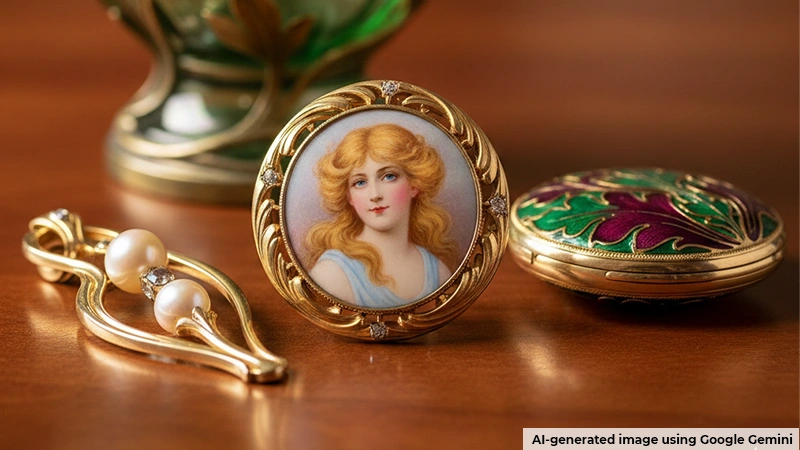
As years passed, several antique and vintage jewelry styles began to exist at the same time. Art Nouveau jewelry existed at the same time as the style periods that came before and after it. This era encompassed its own genre of antique style of natural shapes and flowing lines and broke away from the formal styles of the past. Its jewelry was, in part, a retaliation to the Industrial Revolution as it placed premium value on handmade crafting.
Designs were crafted with flowing lines in softer materials like copper, opal and even glass. Art Nouveau jewelry often features motifs such as flowers, celestial bodies, insects, fantasy animals, sinuous curves and unconventional gemstones.These characteristics captured the essence of the organic world and exhibited the artistic expression of a rebellious spirit.
Edwardian Era (1901-1915)
The Edwardian era, named after King Edward VII, was characterized by refined and elegant jewelry designs. This period marked the transition from heavy Victorian styles to more delicate and ethereal designs. Platinum, with its strength and ability to hold delicate gemstone settings, became the favored metal.
Edwardian era jewelry showcased lace-like designs, featuring intricate filigree work, milgrain detailing and openwork patterns. The use of diamonds and pearls was common, depicting the preference for a softer and more feminine aesthetic.
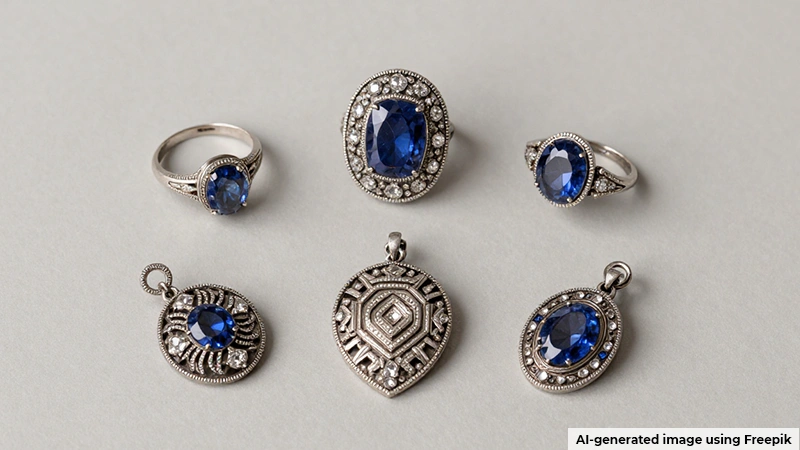
Pieces were often adorned with motifs inspired by nature, such as garlands, ribbons and bows. The introduction of new gemstones, such as aquamarine and peridot, added a touch of color to the designs.
Art Deco (1920-1935)
After the war, Art Deco changed women’s fashion. New styles became simple, elegant, and useful. This allowed women to join in activities that only men did before.
The Art Deco movement brought a modern feel to vintage jewelry. This era used bold colors, geometric shapes, and clean lines. Like other art at the time, this jewelry showed off sharp contrasts and balanced designs. Makers often used materials like jade and onyx.
Art from Egypt and modern machine designs also inspired these pieces. Jewelers often mixed diamonds, emeralds, rubies, and sapphires with black onyx for a bold look.
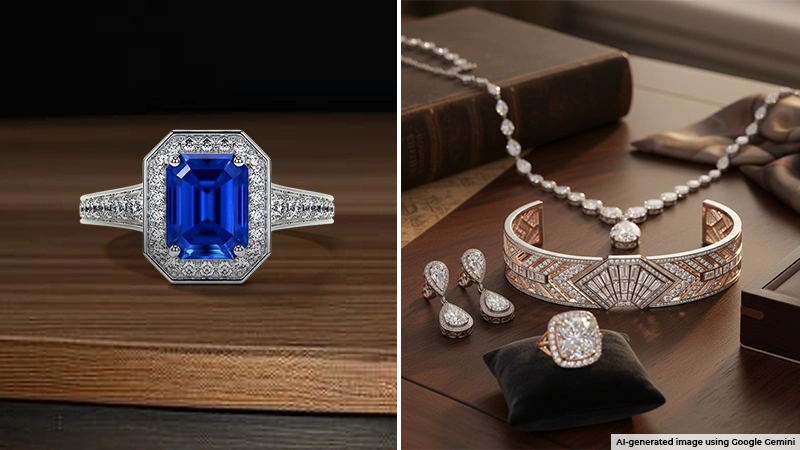
The impact of the Art Deco period extended well beyond the 1930s, impacting later design movements. Its bold, innovative approach laid the foundation for a shift in aesthetics: a movement toward clean lines and geometric patterns.
Find the stunning Art Deco–inspired jewelry at GemsNY, where timeless sparkle meets modern brilliance and expert craftsmanship.
Retro Jewelry (1935-1950)
Retro jewelry emerged during World War II and was all about the golden age of Hollywood with all its glamor and sophistication. Bold designs with large statement pieces, often adorned with colorful gemstones, were popular. This vintage jewelry celebrated luxury, showing the high energy and freedom of the era.
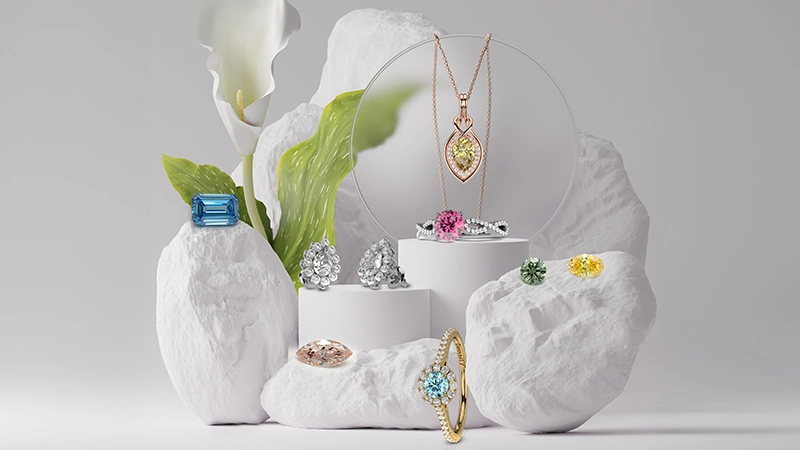
Striking and bright sculptural designs took the stage, often inspired by the style of movie stars. Yellow gold, oversized pieces and gemstones like amethyst, citrine and aquamarine created a unique look that people still like today.
The Transition in Jewelry Trends
With the coming of the 20th century, jewelry trends began to mirror the rapid changes in technology, fashion and society.
Mid-Century Modern (1950s)
Post-World War II, jewelry trends shifted towards clean lines, minimalism and abstract shapes, reflecting the era’s optimism and progress. These designs drew inspiration from architectural and industrial elements, popularizing materials like silver and stainless steel. In addition, these use gemstones sparingly alongside new elements.
A new interest in technology and space-age styles produced a cluster of modern designs. This showed the era’s energetic spirit in vintage jewelry from this decade.
Our selection at GemsNY includes stunning Mid-Century modern pieces, perfect for those who admire the innovative spirit of this time.
Modern Era (1960s-Present)
Undoubtedly, ’60s jewelry enjoyed an era of unprecedented creativity, with the influence of pop art quite evident in jewelry designs. Contemporary jewelry design consists of a wide range of styles and movements.
From bold and avant-garde designs to minimalist and organic forms, jewelry reflects individual artistic expression. Designers experiment with a variety of materials, including unconventional ones like stainless steel, titanium, wood, plastic and even recycled materials.
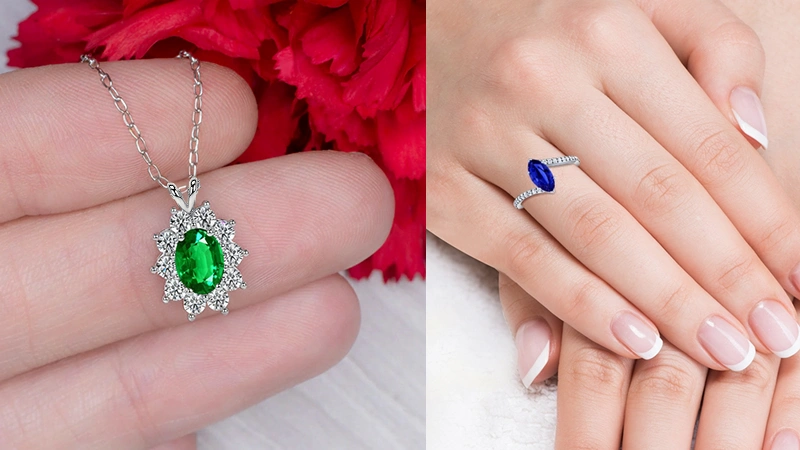
This emphasis on non-traditional materials involves pieces that are not only visually striking but also environmentally conscious.
The key trends in modern jewelry include.
Sustainable and Ethical Jewelry: As consumers become more aware of their impact on the environment, sustainable and ethical jewelry has gained popularity. At GemsNY, we are proud to offer pieces made from recycled metals and ethically sourced gemstones. Thus, we facilitate you to wear your values as beautifully as your style.
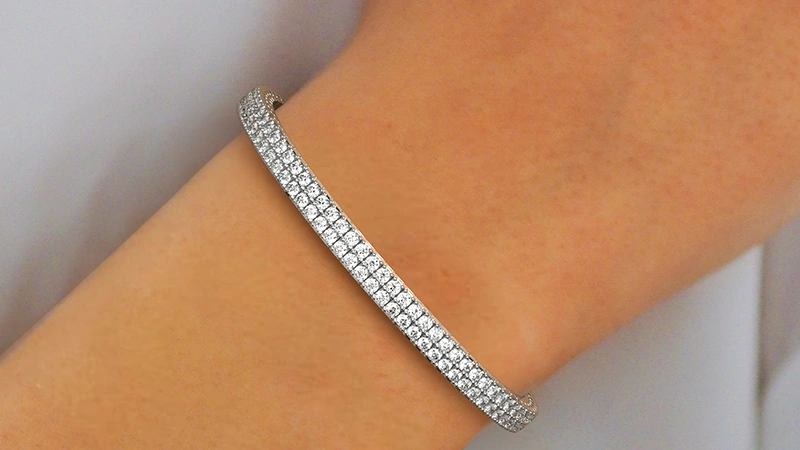
Customization and Personalization: With modern technology, it is easier to create customized jewelry. Whether you’re looking for engraved initials or a custom design, you are able to create bespoke pieces that reflect your style and taste. With GemsNY’s “Make Your Own” jewelry feature, you will be able to create your desired design effortlessly.
Minimalism and Timeless Elegance: While bold statement pieces remain popular, many of today’s trends lean towards simple and timeless elegance. There are simple yet sophisticated pieces that are versatile enough to complement any outfit, making them a staple in your jewelry wardrobe.
Technology-Driven Designs: New technology has changed the jewelry world. Tools like 3D printing and laser cutting help makers create very detailed shapes. These smart features easily mix high fashion with everyday use
Artistic Beauty of Vintage Jewelry Through the Eras
The ever-evolving journey of jewelry design from the Georgian era to the present defines the rich story of artistic expression. Vintage jewelry is not just an ornament but an expression of values, memories and powerful feelings.
From the filigree work of Edwardian jewelry to the innovative designs of modern jewelry, the transformation showcases the impressive creativity and craftsmanship throughout history. At GemsNY, this legacy comes alive in carefully curated pieces that celebrate both timeless craftsmanship and modern twist.
For added assurance,browse through GemsNY reviews. These show how we connect wearers to a tradition of beauty and meaning that has been cherished for generations.
FAQ
What defines vintage jewelry?
Vintage jewelry is typically considered those pieces crafted at least 50–100 years ago. These jewels present styles and craftsmanship from their specific eras, making them unique and collectible.
How is vintage jewelry different from antique jewelry?
As the name implies, antiques are even older. Jewelry made over 100 years ago falls in this category. So if you have any jewel from your great grandparents, perhaps that will count as an antique today.
Is vintage jewelry still in trend today?
Absolutely! Vintage jewelry remains classic because it combines craftsmanship, symbolism and grace that continue to inspire modern jewelry designers.
How do I care for vintage jewelry?
To maintain the brilliance of vintage jewelry, follow a few steps. Store it in soft pouches and avoid harsh chemicals. Have it professionally cleaned and checked for setting security. Proper care ensures its beauty lasts generations.
What era is vintage jewelry?
Vintage jewelry usually refers to pieces that are at least 50 years old, but less than 100 years old. This includes jewelry from the 1920s through the 1980s. Popular vintage eras include Art Deco (1920s–1930s), Retro (1940s–1950s) and Mid-Century Modern (1950s–1970s).
How can I tell what era my ring is from?
You can determine the era of your ring by noticing its design, materials and any hallmarks or maker’s marks. Certain styles, like Art Deco or Victorian, have distinct characteristics. Consulting a jewelry expert such as GemsNY or appraiser can also help identify its time period.
How to identify Victorian era jewelry
Victorian era jewelry (1837–1901) features romantic motifs such as hearts, serpents and flowers. It has handcrafted details, old mine/rose-cut stones and often yellow or rose gold with fine metalwork.
What makes Georgian era jewelry unique?
Georgian jewelry (1714–1837) focuses on artistic handmade designs with nature-inspired motifs and gemstones backed with foil to enhance sparkle by candlelight.
How can I identify Art Deco jewelry?
Art Deco jewelry (1920s–1930s) features bold, geometric patterns with platinum or white gold settings and vibrant gemstones like sapphires, emeralds and rubies.
Where can I buy authentic modern and vintage inspired jewelry?
Trusted jewelers like GemsNY offer carefully curated pieces that honor historic design while embracing modern elegance. Make sure to go through GemsNY reviews evident of the brand’s exceptional craftsmanship, gemstone quality and transparent practices.